 Mr Viral
If you buy something using links in our stories, we may earn a commission. This helps support our journalism. Learn more. Please also consider subscribing to WIRED
Google, Meta, and Microsoft, as well as startups like OpenAI and Anthropic, all had well-developed strategies for generative AI by the time Apple finally announced its own push this June. Conventional wisdom suggested this entrance was unfashionably late.
Apple disagrees. Its leaders say the company is arriving just in time—and that it’s been stealthily preparing for this moment for years.
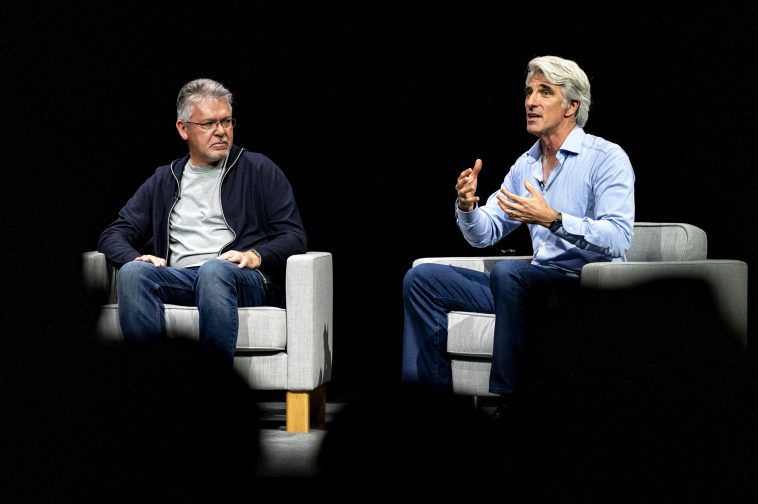
That’s part of the message I got from speaking with key Apple executives this fall about how they created what is now called Apple Intelligence. Senior vice president for software engineering Craig Federighi is a familiar character in an ongoing web series in the tech world known as keynote product launches. Less publicly recognizable is senior vice president of machine learning and AI strategy John Giannandrea, who previously headed machine learning at Google. In a separate interview, I spoke with Greg “Joz” Joswiak, Apple’s senior vice president for worldwide marketing. (These conversations helped prepare me for my sitdown with Tim Cook, which I did the next day.) All of the executives, including Cook, emphasized that despite the massively disruptive potential of AI, Apple was going to handle this game-changing tech with the same clarity and meticulousness the company is known for. To paraphrase a song by some musicians who also formed a company called Apple, the crew at Cupertino was always waiting for this moment to arise.
“We were doing intelligence in 2015, like predicting which apps you would use next and helping predict routes in maps,” says Joswiak. “We didn’t always talk about it publicly, but we were there and ahead of the curve.”
In 2018, Apple poached Giannandrea from Google, a move that Cook told me showed that Apple anticipated the coming AI transformation. The company created a new senior VP position for him, an unusual move for Apple that broke with its traditional hiring norms. Upon arrival, Giannandrea was struck by how much Apple was already exploiting cutting-edge AI in some of its most popular products. “Face ID is a feature you use every day, many, many times a day to unlock your phone, and you have no idea how it really works,” he says. “There’s a lot of deep learning going on privately on your phone just to make that feature work. But to the user, it just disappears.”
Federighi says that experimenting with OpenAI’s GPT-3 model, which was released in 2020, stoked his imagination. “Things that seemed on their way to becoming possible suddenly appeared eminently possible,” he says. “The next real question was whether it was possible to take advantage of the technology in an Apple way.”
Apple soon had multiple teams working on transformer-based AI models. So when ChatGPT captivated the world in November 2022, there was no need for Apple to assemble an internal task force for developing AI products—work was already underway to create features that would similarly “just disappear.” “We have ways of drawing together functional expertise across the organization to accomplish larger product transformations,” says Federighi. “When it came to making a bigger step in a public way, we pulled together many of those threads, in a way that’s just very familiar to us at Apple.”
Apple also had reportedly moved some AI-savvy engineers from its discontinued smart-car project to the Apple Intelligence effort. When I brought this up, Federighi gave me a shrug that signaled, “Hey, I’m not going there.”
Not that any of this was easy. “This is a spot along a journey,” says Giannandrea. “Computer science is changing. For more and more of the things that we want to do, like speech recognition, language understanding, and summarization, the only way to do it is to build. And so this is a progression.”
Apple decided early on that Apple Intelligence wouldn’t be a separate product, but instead something implemented on a systems level. Unlike a number of its competitors, Apple had no interest in producing artificial general intelligence, a quest that to the company seems unrealistic and almost frivolous. “The most credible researchers in the field believe there are many unsolved problems and breakthroughs required,” says Giannandrea. “The idea that you’re scaling up these technologies to go to AGI is very naive.” He says that Apple may very well be involved in important breakthroughs—not to kickstart the Singularity, but to improve its products. “We probably have more engineers working on what we call ‘investigations’ than we do working on what’s going to ship next year,” he says, referring to what is apparently the company’s term for basic research.“I would say that people working at Apple are slightly more interested in what the impact of their work is going to be with consumers.”
“Apple is laser focused on things that are going to make your day-to-day life better,” says Joswiak. That ultimately involves making use of personal information, whether it’s knowing who your close contacts are when you search for a specific photo, recalling places you’ve visited when you use maps, or keeping track of what you’ve downloaded from Safari. To fully make use of AI, Apple would need to organize the personal information of its users in a comprehensive fashion—a scary proposition the company felt it was uniquely qualified to pitch to its customers because of its very public focus on privacy. Protecting that privacy, however, turned out to be a major technical challenge.
“We had to innovate at the data center level, at the system level, at the OS level, at the cryptographic and security protocol level, at the distributed AI inference level … at every level up the stack to do what no one had done before—extend an on-device processing level of security that you have on your phone, to advance processing in the cloud,” says Federighi. “I hope it is the future of how everyone does this kind of process.” His conviction is so strong that he says he hopes other companies mimic the achievement, even if it means Apple losing its competitive advantage. “There are lots of cases where we have very mixed feelings about people copying what we do, but when it comes to our privacy practices, we were happy to set an example and encourage,” Federighi says.
Only when it built those privacy systems did the company unveil Apple Intelligence, and then small groups of features were released in waves to much fanfare. But the reality is that the first public iteration of Apple Intelligence isn’t quite blowing people away. Critics complain that its inbox summaries, email rewrites, and photo search, as well as a more conversational Siri, don’t seem much different than the gen-AI offerings already unveiled by competitors. But just as Apple crashed its rivals’ parties when it came to digital music streaming and smart watches, the company is confident, if not hubristic, that its Apple-tude will ultimately prevail. “This is a multi-decade thing,” says Giannandrea. “I was very excited about the stuff that we’ve announced this year, but I think Craig and I are much more excited about, like, what’s in the next 10 years.”
Naturally, I asked the two executives to share details of what those future products might be. And also naturally, they refused. “You know us better than that,” says Federighi. Even if some competitors release similar innovations first, Apple will take it in stride. This crowd prides itself on being not first, but best. Generative AI may be the ultimate test to see if that philosophy still works.
Time Travel
This is not the first time I got an exclusive look at Apple’s AI journey. In August 2016, the company gave me a peek into how it was implementing the latest techniques in AI during a day of interviews with Federighi as well as executives Phil Schiller and Eddy Cue, and scientists Tom Gruber and Alex Acero. The message then, as now, was that Apple was on it, but doing AI in its own way.
Even as Apple is bear-hugging machine learning, the executives caution that the embrace is, in a sense, business as usual for them. The Cupertino illuminati view deep learning and ML as only the latest in a steady flow of groundbreaking technologies. Yes, yes, it’s transformational, but not more so than other advances, like touch screens, or flat panels, or object-oriented programming. In Apple’s view, machine learning isn’t the final frontier, despite what other companies say. “It’s not like there weren’t other technologies over the years that have been instrumental in changing the way we interact with devices,” says Cue. And no one at Apple wants to even touch on the spooky/scary speculations that invariably come up in AI discussions. As you’d expect, Apple wouldn’t confirm whether it was working on self-driving cars, or its own version of Netflix. But the team made it pretty clear that Apple was not working on Skynet.
“We use these techniques to do the things we have always wanted to do, better than we’ve been able to do,” says Schiller. “And on new things we haven’t been able to do. It’s a technique that will ultimately be a very Apple way of doing things as it evolves inside Apple and in the ways we make products.”
Ask Me One Thing
Luana asks, “Can Intel resuscitate, or is it going to become Xerox?”
Thanks for the question, Luana. When I was watching supremely confident Nvidia CEO Jensen Huang at this week’s WIRED Big Interview event, I kept thinking about the plight of Intel, which once stood atop the chip world with similar triumphalism. It invented the microprocessor! Building on that innovation, Intel became the default chip for the personal computer revolution. But ultimately, it fell victim to the Innovator’s Dilemma. The failures of its awkward attempts to elbow its way into the media world could be shrugged off, but not its big misses—the mobile revolution and the importance of graphic chips, earth-shattering events that its rivals exploited. Perhaps the coup de grâce was the rise of custom silicon by companies like Apple and Amazon, which further decreased their reliance on Intel’s offerings. At this point, who needs Intel?
I wouldn’t equate Intel with Xerox, though. The advances of the latter’s PARC division were never really exploited. The clueless top brass at Xerox’s headquarters sat by while Apple, and eventually everyone else, copied its graphical user interface. Intel, in contrast, built a fantastic business—so successful that it was easy to fall into complacency. I can’t say whether resuscitation is possible. (If twice-former CEO Pat Gelsinger can’t figure it out for a huge paycheck, don’t expect me to do it for free.) But Intel does have incredibly valuable expertise and assets, notably its chip fabrication plants. At least until Trump pulls the plug, it also has billions of dollars in funding from the Biden administration to produce those chips in the United States. If Intel doesn’t get bought by one of its competitors, maybe it can hang around until the next big opportunity arises—and a hungry new CEO is smart enough to bet the farm on it. Meanwhile, Huang might consider embroidering the Intel logo in the lining of his famous leather jackets as a persistent reminder of how the mighty can fall.
You can submit questions by leaving a comment below or sending an email to [email protected]. Write ASK LEVY in the subject line.
End Times ChronicleIt’s now official: Björk declared that the apocalypse has already happened. But don’t worry, “biology will reassemble in new ways.”
Last but Not Least(This is a special Steven Levy–themed assortment of links for this year’s final Plaintext before I use up my vacation days.)
Here’s the complete Tim Cook Big Interview. I love Tim’s answer about Apple giving Stevie Wonder a demo of the Vision Pro mixed-reality headset.
If you want to watch me interviewing Cook, here’s a video.
At the WIRED Big Interview event, Figma CEO Dylan Field apologized for telling me that he wasn’t selling his company—hours after fielding an acquisition offer from Adobe. (The deal ultimately fell apart under scrutiny from regulators.)
Former OpenAI CTO Mira Murati told me at the same event that she is still optimistic that AI won’t kill humanity—but it’s up to us to make sure that ends up being the case.






GIPHY App Key not set. Please check settings