 Mr Viral
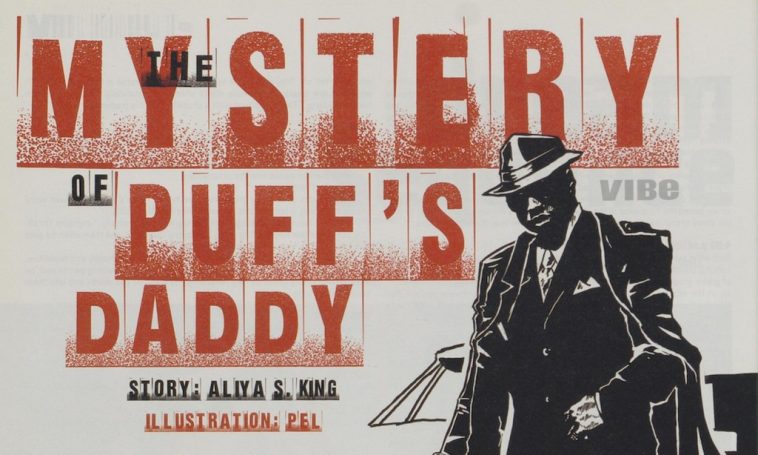
SEAN DIDDY COMBS PUSHES MUSIC, FASHION. FRAGRANCE AND VODKA. BUT HIS FATHER PUSHED A DIFFERENT KIND OF PRODUCT UNTIL THE DAY ONE OF HIS GANGSTER FRIENDS TOOK HIM FOR A RIDE. VIBE INVESTIGATES THE MURDER OF MELVIN COMBS
A car, parked on 106 Street and Central Park West. After taking a look inside the car as the cab sped by, she had the cab drop her off at Small’s Paradise.
“They killed Melvin!” she screamed as soon as she stepped inside the bar. “I just came from down by the park and saw him in his car. Somebody killed him!”
Claude Helton, an associate of Melvin’s, slid off his barstool and made his way outside.
“Had to go see what she was talking about,” Helton says today.
Helton and a few of his partners drove down to 106th. The police had not arrived; no crowd had yet formed, and it was silent on the block. Hel-ton slowed down just a bit when he saw Melvin’s car.
“Brain matter all over the window,” Helton says matter-of-factly. “I just looked at the car and said, ‘Yeah, they got Melvin.’ And then we went on back up to the bar.”
Helton has been in and out of prison for most of his adult life. It’s hard to envision this older gentleman running the streets of Harlem. Now in his late-60s, Helton has rheumy hazel eyes and a lined, weathered face. He is soft-spoken and smiles easily.
Today, he sits in an office in the South Bronx, clutching a shoebox of mementos and photos of his days in the street life. He’s agreed to meet and talk about his friend Melvin Combs, though he often has to throw his head back and close his eyes tight for a long moment to jog his memory of the old days. But some of his stories—the ones that are hardest to tell—come back in an instant.
Helton had been friendly with Melvin for years, ever since Melvin had gotten into the drug game in the late ’60s. But in the weeks before his death, there had been something in the air. People were talking about Melvin, and it wasn’t good.
“There was a buzz,” says Helton. “Melvin didn’t know. But I did. I heard the whispers. It was his time.”
It was January 26, 1972, and Melvin Combs was 33 years old. Five days later, the former U.S.A.F. Airman was buried at the National Cemetery in Farmingdale, New York. The New York Amsterdam News reported on the service: “He is survived by his young wife Janice, who was draped in chinchilla at the rites, and a young son.”
His young son, Sean John Combs, was two years old. When he was old enough to ask questions, he would be told that his father was killed in a car accident.
Melvin had been shot at point blank range, twice, in the head. Helton says the killer was sitting in the passenger’s seat of Melvin’s car. The whispers Helton had heard in the weeks before the murder only got louder in the days following.
Melvin Combs, the dark-skinned, pretty boy with the toothy, megawatt smile, was a co-conspirator in a case that would send some members of his crew to prison for up to 12 years. He had been arrested on drug charges just two weeks before his death.
The question on everybody’s lips: Did Melvin Combs rat out his fellow drug dealers? And did he pay the ultimate price for doing so?
This illustration originally appeared in VIBE’s June / July 2010 print issue.
Illustration by Pel
When asked if he knows who was responsible for the crime, Lucas just grunts.
“I ain’t giving no names. But whoever it was, I heard he got it back.”
Back in the Bronx, Claude Helton exhales. He stares out of the window and then runs a hand over his face, lifts his cap, and then replaces it. He’s not used to talking about the past. Not used to being interviewed. He loves to reminisce. But not like this—not with a recorder on. But the old stories stick with you. And eventually, they are told.
“I know who killed Melvin,” he says, his face weary but relieved as he speaks on Melvin’s death publicly for the first time. “He was a friend of mine. Friend of Melvin’s, too.”
Helton was sent to Lewisburg federal prison in 1972 on a drug conviction. There, he met up with an old friend, Walter Grant. Grant was the ex-school teacher from Mount Vernon who was Willie Abraham’s right-hand man.
“Walter told me that he parked his car on 106th and Central Park West and then took a cab to the Gold Lounge, a little further downtown. Then he called Melvin and told him to come pick him up. Melvin had no idea what was about to happen. Melvin picked him up, and Grant told him to drive him to his car. Told him to pull up and park right behind his car.”
Helton holds up his hand, makes a gun with his thumb and forefinger, and holds it to his temple.
“He told me he took out his piece and said, ‘Melvin, you got this coming to you.’ And that was it. Shot him dead. Got out of the car, got into his own car, and peeled out.”
According to Helton, Grant was convinced that Melvin had either ratted out his crew after his arrest—or planned to.
Frank Lucas believes that just the chatter about Melvin’s arrest led to his death. “I think someone shot their mouth off about something, and they didn’t know what they were talking about. People were just imagining things and talking crazy. Got him killed.”
“I read about it in the papers,” says Wallace Hasan, Melvin’s childhood friend. “I was hurt. But I wasn’t surprised. This was the life he chose.”
Elbert Deen, his former neighbor, saw Melvin a few months before his death. “He was on Seventh Avenue, near the Gold Lounge. He said, ‘I’m having my birthday party, come in and have a drink. But I was a Muslim by then, selling my Muhammad Speaks. Told him I couldn’t do that. So he said, ‘Here’s my number. I got a place in Yonkers now. Call me so we can get together.’ I never saw him again.”
Hasan blames Melvin’s easygoing personality for his violent death. “He was too trusting,” he says. “He trusted those guys in that field. You can’t do that.”
Janice Combs remained in Harlem for several years before relocating to Mount Vernon. According to Helton, Walter Grant was killed in Mount Vernon years after Melvin’s death.
While Diddy discovered the truth about his father’s past as a drug dealer, it is unknown if he ever heard the rumors surrounding his father’s death. Both Diddy and his mother declined to comment for this piece.
But as he began to climb up the music industry ranks, he continued to search for more details about his mysterious father. And at the same time, his father’s childhood friends and business associates began to find out that “Melvin’s boy” had gone on to do big things.
Elbert Deen went on to raise a family in the Westchester County area. (His sons, Jaoquin “Waah” Dean and Darrin “Dee” Dean would go on to found Ruff Ryders.)
When his sons were new in the business, someone told Elbert that Melvin’s boy was also in the music industry. Deen arranged to meet Diddy, who was then working at Uptown Records.
“I came to talk to him about my sons. But of course, Sean wanted to know everything I could tell him about his father as well. I told him everything I could remember. It was clear that he had a real hunger for any information. I remember he was even carrying around this framed 8×11 photograph of his dad in his bag. He pulled it out to show it to me.”
Claude Helton put the connection together between Melvin and Diddy while he was locked up in the mid-90s on a parole violation. “Me and this young boy got to talking,” he says. “And he was telling me about a guy named Combs. Now that’s a rare name. So I instantly thought of Melvin. When I got out, I saw him on television, and of course, I knew right away who he was. The boy looks just the same as he did back in Harlem.”
When his son was born, Melvin would often have his baby boy with him at some of the hot spots in Harlem.
“Three places you could see Melvin with Sean back then,” says Helton. “The Gold Lounge, Shalimar, or Small’s. He’d be holding him, showing him off. When he got a bit older, he’d be standing right there with him, trying to walk. That boy look just like his daddy.”
“Puffy got this video, the one he made for Biggie,” says Helton. “He’s dancing around, singing that ‘Every Breath You Take’ song. Every time I see that video, I think of Melvin. That’s him right there. He would do that same exact dance when we’d be in the nightclubs, throw his hands up, and make the same exact face. It’s crazy. Everything about them is exactly the same, from their style to their smile.”
Melvin Combs’s brief run in the streets will never be made into an American Gangster-style biopic. If it weren’t for his son, Melvin’s story—like so many others before and after him—would be little more than a footnote.
But the well-coiffed pretty boy with the arms-held-high foot-shuffle dance lives on in the son he left behind. One can only wonder what Melvin would make of his son’s success. When asked if he may have traded in the street life as he got older, Frank Lucas laughs a long, throaty laugh.
“Who, Melvin? Hell no! Much as Melvin loved money?” Lucas laughs again. “The way he loved money, he’d have just as much money today as his son got. Maybe more.”
Additional reporting by Maiya Norton.






GIPHY App Key not set. Please check settings