 Mr Viral
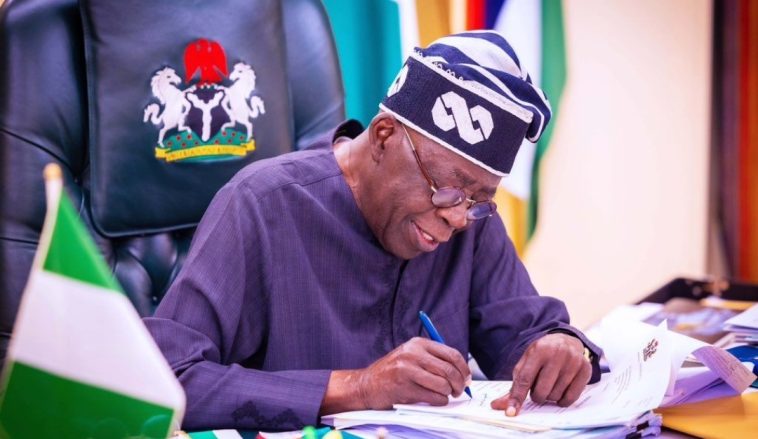
A development economist, Anyanwu Chris, says Nigeria’s economy is on a path of sustainable growth due to President Bola Tinubu’s bold and courageous reforms.
Speaking on Monday in Abuja at a national summit organised by the Integrity Group of Nigeria, Chris said Tinubu’s policies are gradually reshaping the country’s economic future.
His keynote presentation was titled, ‘President Bola Ahmed Tinubu’s Economic Policies and Key Reform Achievements: The Case for His Government’s Continuity till 2031’.
Mr Chris noted the need for Mr Tinubu to continue in office to fully realise the benefits of his policies. He highlighted key reforms such as fuel subsidy removal, exchange rate unification, and investments in infrastructure and power, which, he said, are essential for Nigeria’s transition to sustained, inclusive growth.
“While the long-term impact can only be assessed over time, the economic policies and projects are already creating significant impacts in all facets of the Nigerian economy,” Mr Chris said.
He noted that the fuel subsidy removal, while initially challenging, had saved the country an estimated N400 billion to N500 billion monthly and had also reduced corruption and smuggling.
Mr Chris added that the massive investment in infrastructure, including the 700-kilometre Lagos-Calabar coastal road and the newly commissioned Keffi-Akwanga-Lafia-Makurdi highway, exemplified the administration’s commitment.
He commended the signing of the Electricity Act of 2023, which, he said, had decentralised the power sector and allowed states to generate and distribute their own electricity, leading to improved power supply.
“The Tinubu administration (through mid-2025) has pursued a bold reform agenda centred on fiscal stabilisation, public investment, social welfare expansion, sector diversification, and institutional rebuilding.
“As a result of this and other bold, deliberate policies, the economy is growing stronger again. The World Bank recently reported that Nigeria’s economy grew at its fastest rate in nearly a decade in 2024, attributing this to the early successes of the President’s macroeconomic reforms,” said Mr Chris.
He added, “The country’s fiscal deficit dropped from 5.4 per cent of GDP in 2023 to 3.0 per cent in 2024, bolstered by increased national revenue, from N16.8 trillion to N31.9 trillion.
“The continuity of President Tinubu’s administration till 2031 will play a crucial role in effectively implementing and achieving the long-term goals of the social, financial, and economic policies and projects he initiated in the first tenure of his administration.”
Mr Chris said that within two years of the Tinubu-led administration, Nigeria’s trade balance rose from N20 billion to N5.7 trillion, from the first quarter of 2023 to the first quarter of 2025.
He added that the average oil production also increased from one million to 1.8 million barrels per day from May 2023 to July 2025, and net reserves rose from $4 billion to $ 23 billion over the same period.
The economist noted that the country’s annual average power generation, which was 4,000MW before May 2023, was now over 6,000MW.
(NAN)
We have recently deactivated our website’s comment provider in favour of other channels of distribution and commentary. We encourage you to join the conversation on our stories via our Facebook, Twitter and other social media pages.





GIPHY App Key not set. Please check settings