 Mr Viral
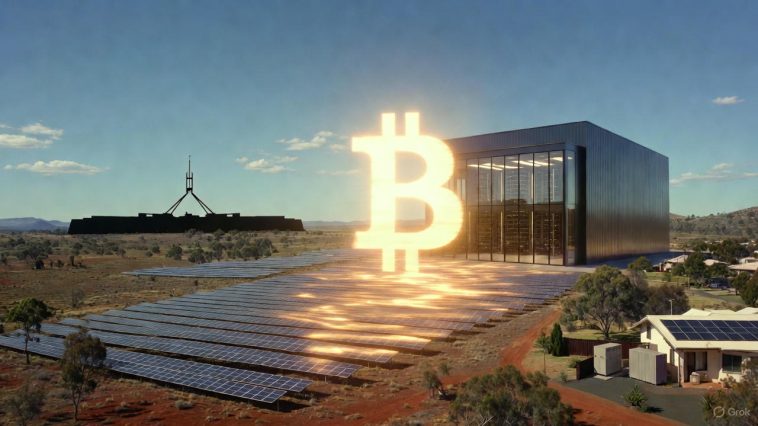
Australia has been incredibly successful with their efforts to promote rooftop solar, combined with grid-scale renewable energy, It’s flooded the market with an excess of power during the middle of the day.
The Government recently announced the introduction of the Solar Sharer scheme, set to roll out in 2026, it will make energy providers include at least 3 hours of free power as part of their default offer, to millions in New South Wales, South Australia, and southeast Queensland. If this is successful, it could be rolled out nation-wide, in a win for renters and apartment dwellers who don’t have the option of reducing energy bills by adding solar.
Given the excess supply during the middle of the day, the wholesale prices plunge to be negative, so while I understand the Governments want to address this, I think there’s a far better alternative.
Bitcoin is famous for its proof of work structure, meaning you effectively trade energy to mine what’s left of the 21 Million Bitcoin that will even be in existence. The cost of energy has made small-scale mining unprofitable, particularly as each halving event occurs, increasing the complexity to mine a block. If Australia as a country has excess (also known as virtually free power), this could be injected into a national Bitcoin mining operation.
This would take an investment in hardware, which depending on how the economics play out, could even include battery storage to keep mining at a low cost for more hours of the day.
– Advertisement –
Households stand to pocket modest gains under Solar Sharer, but it’s no game-changer for everyone. A household may be able to timeshift some usage, like a load of washing, or a cycle of the dishwasher, but most are unlikely to shave serious numbers off their annual energy bill. Low-income renters or shift workers might barely notice, as noted by energy advocates who flag the scheme’s bias toward flexible lifestyles.
The Bitcoin mining alternative
Bitcoin’s price can certainly be volatile, but there’s no denying it’s meteoric rise, increasing 25,403% since inception and 670% in the past 5 years.
Imagine the Government leverages solar-powered (distributed) Bitcoin rigs at scale, to unlock crypto that grow in value over time.
Start small with a 1 GW setup – about the size of a big solar farm, and it could mine hundreds of Bitcoins a year at basically zero electricity cost. At today’s prices around A$160,000 per coin, that’s real money stacking up fast.
How the savings stack up
Under Solar Sharer, your average family might save A$400 a year to start, climbing a bit as more homes join, and we get better at shifting loads. By 2030, with 7.5 million solar homes, the nationwide handout hits A$4.5 billion yearly.
Flip to mining, and that same excess energy generates A$100 million+ in the first year alone. Hold most of the coins, let them appreciate, and by 2030 you’re looking at a A$1 billion+ digital piggy bank.
Fast-forward to 2050 and 12 million solar homes could mean A$10 billion in free power giveaways. By comparison, if we went down the mining route, it could yield as much as A$45 billion, built from coins mined decades earlier now worth millions each.
Yearly perks per household
Solar Sharer starts at A$400 and tops out around A$900. Bitcoin rebates being smaller, but could explode over the years, possibly enough to seriously reduce the power bill, or even help fund new home batteries to enable energy independent homes in the longer term.
Global governments leading the charge
This isn’t unheard of internationally. Bhutan, a country in South Asia, mines using surplus hydroelectricity and has accumulated a stash of bitcoins worth $1.3 billion, or roughly 40% of the country’s gross domestic product.
El Salvador has mined 454 Bitcoin (est. value US$48.3M) using geothermal power.
Australia’s bathed in sunlight (and has a healthy amount of wind) and that could be to unlock we need to power crypto miners at a fraction of the cost elsewhere around the globe.
The smarter solar play
Sure, 3 free hours of energy sounds great today, but there’s an opportunity cost the Government isn’t talking about, one that could generate revenue for the Government over the long-term, something that a % of should be returned to the people in the form of energy price reductions.
Let us know what you think in the comments.






GIPHY App Key not set. Please check settings