 Mr Viral
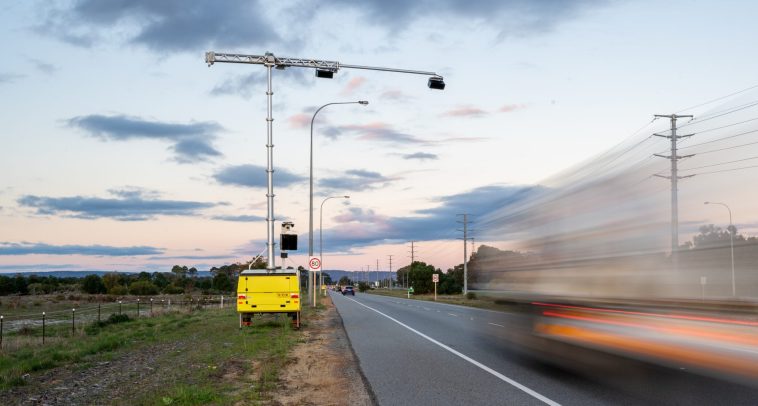
The 2025 Melbourne Awards, were recently held at Melbourne Town Hall and saw a number of winners announced across a variety of categories. The most technology-focused category was ‘Knowledge and Innovation’, which was won by Acusensus Australia for their groundbreaking road safety tech that’s already saving lives across Victoria and the nation.
Chances are you’ve never heard of Acusensus before, but you may be familiar with some of their work. Founded in Melbourne in 2018 by Alexander Jannink after a personal tragedy (losing a close friend to a distracted driver), Acusensus set out to fix what traditional policing couldn’t.
Jannink, an engineer with skills in computer vision, built the world’s first automated system to detect mobile phone use behind the wheel. Fast-forward seven years and the company is ASX-listed (ticker: ACE), employs over 100 staff, and operates in Australia, New Zealand, the US, UK, and India.
Their mission? Tackle the “fatal five”: speed, distraction, seatbelts, impairment, and fatigue using AI that works 24/7, rain or shine. Acusensus cameras scan millions of vehicles monthly with prosecutable evidence. In NSW alone, where the tech launched as a global first in December 2019, illegal phone use has reduced by 6x, helping the state achieve the lowest road fatalities per capita in Australia.
“This year’s finalists represent the spirit of Melbourne – inclusive, creative, innovative, and deeply community-minded. From sustainability champions to arts leaders, every finalist is making our city stronger, more connected – and doing us all proud.”
Mark Scott, Tourism and Events portfolio head, City of Melbourne.
Let’s dive into the technical details to understand how their system delivers results.
– Advertisement –
Heads-Up Distracted Driving Detection: The OG Life-Saver
The flagship Heads-Up platform uses dual high-resolution cameras, one to capture the vehicle’s number plates, and another pointed through windscreens up to 30 metres away. Infrared flash ensures image clarity regardless of the time of day, without dazzling drivers, while polarising filters cut glare from tinted glass.
The images are then processed using an on-device AI model, which takes the 4K video at 30 frames per second, analysing them for breaches of mobile phone use. This could be hand-to-ear, hand-to-lap, or device-in-view positions, and it does all this with more than 95% accuracy, validated by independent labs.
By leveraging AI at the Edge (that is, processing the video frames in the roadside trailer is key to dealing with the constant stream of traffic. Results show that as much as 99% can be determined by the system in the field (at the edge), while just 1% requires an additional human review. That’s an impressive level of accuracy and clearly beats any level of human deployment on this problem.
This slashes operational costs and when offending images are identified, they are sent via 5G using encrypted offence packages, later correlated to the vehicle owner, and fines are sent to the corresponding owner’s details.
In a single NSW deployment, one trailer processes 50,000 vehicles daily, issuing fines that fund more cameras. Clearly the fine itself is not an absolute deterrent for people, but getting hit multiple times and risking losing your license, this can truly make some road users think twice.
While autonomous, driverless cars are going to happen in the future and relieve drivers of their duties to pay attention, today, humans are still required and using your phone does not allow that responsibility to be achieved safely.
Fuse Multi-Offence Platform: One box, many busts
Fuse takes Heads-Up further by layering seatbelt detection, ANPR hotlists, and even motorcycle helmet checks.
Using the same camera array, convolutional neural networks (CNNs) segment driver and passenger torsos, detect belt webbing via edge detection, and cross-reference plates against stolen or uninsured databases in under 200ms.
Western Australia rolled out Fuse trailers in 2023, allowing one unit to enforce phone use, seatbelts, and point-to-point speed simultaneously.
Harmony Precision Speed Enforcement: No more speed creep
Harmony brings average-speed calculation to the party with sub-second GPS sync between entry/exit cameras. Queensland uses Harmony for heavy vehicle corridors, catching trucks creeping 5km/h over limits that cause outsized damage.
These units are solar-powered with batteries and leverage 4G/5G connectivity to keep trailers off-grid for weeks. An onboard NVIDIA Jetson Orin NX crunches 275 TOPS of AI inference, running multiple models in parallel without cloud latency. Over-the-air updates push new detection capabilities like the 2024 impairment pilot using micro-movement analysis for drowsy drivers.
NSW’s fixed and mobile Heads-Up fleet has issued over 500,000 infringements since 2020, but the real win is behaviour change. Monash University Accident Research Centre found a 68% sustained drop in phone use at enforced sites. Road fatalities in NSW fell 22% from 2019-2022 while Victoria (without widespread detection) dropped just 9%. Extrapolate that nationally and Acusensus tech could prevent hundreds of deaths yearly.
Victoria is catching up fast with the Transport Accident Commission (TAC) trials in Geelong and Ballarat, having already logged 10,000+ detections in 6 months. Acusensus recently won a tender for 50 new mobile units across regional highways and it’s safe to say you can expect those black trailers popping up near you soon.
I’ve seen one of these around Albury Wodonga this week, so they certainly are out and about. There is an aspect of driver’s learning where they are positioned and adapting their behaviour temporarily to avoid fines, which is where their mobile nature helps. Simply redeploy to a new location to maintain effectiveness.
Global rollout and future pipeline
Beyond Australia, Heads-Up operates in New Zealand (phone + seatbelt), the UK (Department for Transport pilot), and US states like Maryland for work-zone safety. India’s Mumbai-Pune Expressway uses Fuse to tackle truck overloading via weight-in-motion integration. Every deployment feeds the AI, anonymised data retrains models monthly, boosting accuracy across climates and vehicle types.
Acusensus is piloting another product called “Impairify”. This uses interior camera feeds from installed vehicles to detect pupil dilation, head nods, and lane weave for drug/alcohol/fatigue flags. They’re also embedding worker safety tech on mine sites, alerting supervisors to phone use near heavy machinery.
Winning the Melbourne Award is huge for a company that started in a South Melbourne warehouse. It’s validation that gritty local engineering can solve global problems and is helping to improve road safety through technology.
For more information, head to https://www.acusensus.com/






GIPHY App Key not set. Please check settings