 Mr Viral
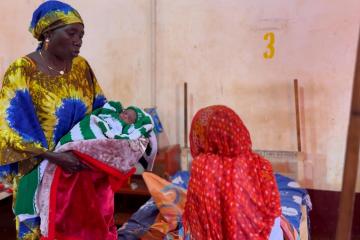
Bangui — The Central African Republic has one of the highest maternal mortality rates in the world, with 829 deaths per 100 000 live births recorded in 2023.
Behind these numbers lie painful realities: women giving birth far from health facilities, long distances to reach the facilities, limited resources and sometimes beliefs that hinder access to care.
Fewer than 50% of pregnant women attend the four recommended antenatal consultations, and nearly a third of deliveries still take place at home, exposing mothers and newborns to serious risks, according to national figures.
To address the challenge, the country has made providing every woman with quality care without financial risk a priority—the essence of universal health coverage. The country’s strategy to lower maternal deaths focuses on providing essential services, which includes antenatal consultations, deliveries assisted by skilled personnel, and management of complications through universally access without poverty being a barrier.
The strategy is crucial to preventing avoidable deaths. It gives families the chance to live healthy lives and helps to build community trust in the health system, a key factor in encouraging women to use available services.
With WHO’s support and funding from a major donor, the government has taken strong measures to improve maternal health. One of the cornerstones of the approach to curb maternal mortality is training and deploying community midwives.
The midwives, chosen by their communities, have become vital links between families and health facilities. They inform, accompany and guide pregnant women up to delivery, and ensure post-natal follow-up.
They also help change behaviours by explaining why antenatal care and assisted delivery are essential to avoid complications. They reassure families and create bonds that save lives.
“Once, in the middle of the night, I had to walk a patient to the hospital, ready to intervene on the way if necessary,” says Erguine Souhat, a midwife in Bria, a town in the country’s central region. “We follow up women from the beginning of pregnancy through the postpartum period, so that the mother and her child stay healthy.”
Dr Romaric Ghislain Zarambaud Bohy-Ngombet, Director of Family Health and Population at the Ministry of Health notes that “for us, maternal mortality is a national emergency. The Minister of Health has set a clear path: strengthen providers’ skills, improve technical facilities, and bring services closer to communities. This is how we move toward universal health coverage.”
“Today, we have more than 1200 active midwives in 32 of the country’s 35 health districts. They work mainly in rural areas where access to health facilities is limited. Where they operate, we see about a 30% decrease in home deliveries and an increase in the number of women attending antenatal consultations,” says Dan Mauricette, National Coordinator of Community Midwives.
In 2024, WHO helped equip about 30 maternity wards with medical equipment and essential medicines to provide pregnant women with a safer and more dignified care. WHO also supported the training of 300 community midwives in essential care during pregnancy, childbirth and postpartum, as well as referral. A total of 64 healthcare providers were also trained on detecting gynecological risks to ensure quality care and prevent avoidable deaths.
“Every equipped maternity ward, every trained midwife means a life that can be saved,” says Dr Caroline Clarinval, WHO Representative in Central African Republic. “Our goal is clear: that every woman, wherever she lives, can give birth safely. This requires adapted protocols, strengthened skills, and continuous community awareness.”
These advances are changing lives. For Albertine Shoura, a mother of three, having the support of a midwife was critical during her pregnancy and especially for delivery. “ I gave birth at home and almost lost my life, as well as my child. Thanks to Erguine’s support, I was able to deliver my baby safely at the hospital, surrounded by proper care. I thank God and I thank Erguine for saving my life and my baby’s,” she says.
“When a mother survives and her child too, an entire family keeps hope. I wish every woman in my country could have this chance and that giving life becomes a moment of joy, never a danger,” Shoura says.






GIPHY App Key not set. Please check settings