 Mr Viral
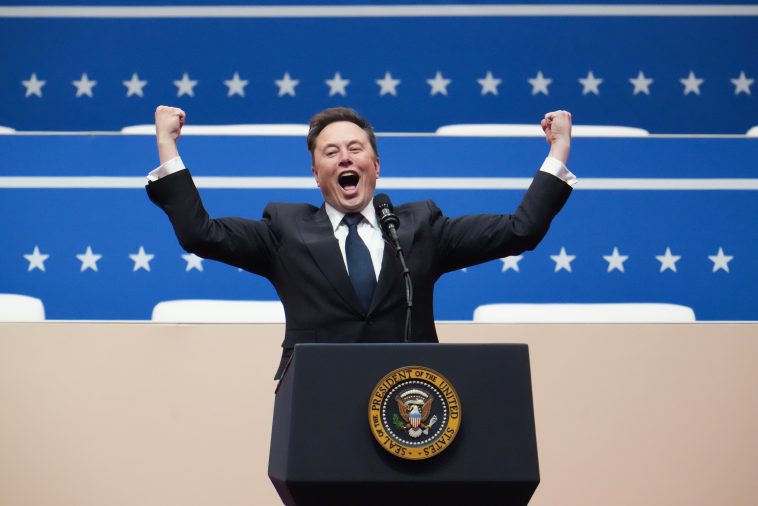
Under the auspices of dismantling the “deep state,” Elon Musk has become something of a deep state unto himself—an unelected, unaccountable billionaire running roughshod over the United States government, with little apparent constraint from those who the American people actually elected.
But rather than rage against him, as Donald Trump has long done against the bureaucrats he claims to be politically motivated, the president has continued to empower him, designating the world’s richest man a “special government employee” and supporting his takeover, and possible dismantling, of federal agencies.
“He’s a very talented guy from the standpoint of management and costs,” Trump told reporters Monday in the Oval Office. “We’re trying to shrink the government, and he can probably shrink it as well as anybody else, if not better.”
Trump’s comments came as Musk moved to put the US Agency for International Development (USAID) “into the wood chipper,” as the billionaire put it on his social media site, and his Department of Government Efficiency (DOGE) gained access to the Treasury Department’s payment system, alarming legal and security experts. “It’s an absolute nightmare,” as Alan Butler of the Electronic Privacy Information Center told Politico.
The unprecedented moves have already triggered several lawsuits. But Musk—who is riddled with conflicts of interest—has continued apace, appearing to set his sights on the Department of Education as his next target. “To my friends who are upset, I would say with respect, ‘Call somebody who cares,’” Republican Senator John Kennedy said Monday on Fox News. “It’s USAID today. It’s gonna be the Department of Education tomorrow.”
That about sums up the GOP response to Musk. Though Trump said Monday that the DOGE head can’t do “anything without our approval,” and Treasury Secretary Scott Bessent assured lawmakers Musk is not controlling the department’s payment system, Musk has not appeared to encounter any real friction from the White House, let alone Capitol Hill Republicans. It’s a “constitutional question,” Senate Judiciary Committee Chair Chuck Grassley shrugged to Politico, as Musk usurped congressional authority: “It’s how you define the executive powers of the president of the United States, and I can’t define that for you.”
Democrats have protested against this Musk-ification of the federal government. “An unelected shadow government is conducting a hostile takeover of the federal government,” Senate Minority Leader Chuck Schumer wrote Monday. But their protests always seem to be a step behind Musk, and there’s limited concrete action they can take as the minority on Capitol Hill. “This is the one shot the American people have to defeat BUREAUcracy, rule of the bureaucrats, and restore DEMOcracy, rule of the people,” Musk replied to Schumer. “It’s now or never,” Musk added. Public “support is crucial to the success of the revolution of the people.”
That last part may be true: While public backlash may mean little to the (theoretically) lame-duck president and his unelected wrecking ball, it could at least have an effect on the elected Republicans who enable them. If Trump and Musk can claim they’re acting on a mandate, there’s virtually nothing they won’t be able to get away with. If it’s clear the administration is overstepping the authority the public granted it, though, there may be at least some incentive for Republicans to pump the brakes.
“Before it’s too late,” Democratic Senator Chris Murphy said Monday, “this is the moment for Americans [to] stand up and say, ‘We want our government back.’”






GIPHY App Key not set. Please check settings