 Mr Viral
Credit: TechNode
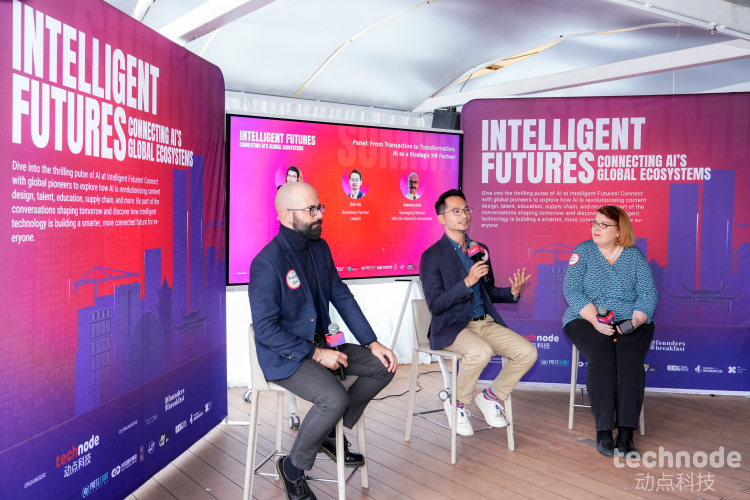
The Intelligent Futures: AI’s Global Ecosystems, organized by TechNode and co-organized by TECOM and Founders Breakfast, convened in Hangzhou last week. At a panel discussion titled From Transaction to Transformation: AI as a Strategic HR Partner, experts from the fields of human resources, organizational development, and corporate management explored how AI is evolving from a transactional tool into a true driver of organizational transformation.
Speakers included Eric Lin, Business Partner at LeapIn; Jessica Gleeson, CEO of BrighterBeauty; and Fabrizio Ulivi, Managing Partner at SBA Shi Bisset & Associates. Despite coming from diverse professional backgrounds, the panelists shared a common view: AI is accelerating performance improvement, enhancing decision-making quality, and democratizing talent development inside organizations.
AI moves from efficiency tool to capability builder
Over the past 18 months, the use of AI within companies has expanded rapidly. From streamlining administrative workflows to enhancing employee capabilities and business outcomes, its impact has become increasingly evident.
Ulivi noted that organizational development often relies on large volumes of employee-related data, and one of AI’s most prominent values lies in its ability to accelerate processes. For example, in learning and development (L&D), AI can generate personalized growth pathways, offering employees more precise and capability-aligned learning plans— improving the return on training investments.
Eric illustrated the efficiency gains with an example from recruitment. Traditionally, HR staff had to manually sift through large numbers of resumes, a repetitive and inefficient task. AI can now handle initial screening, freeing HR teams from routine administrative work and allowing them to focus on higher-value responsibilities such as in-depth conversations with candidates and assessing cultural fit.
“HR professionals shouldn’t waste time on tasks like flipping through a resume in three seconds,” he said. “Their real value lies in evaluating the match between people and the organization.”
Rethinking bias in AI-driven hiring with human judgment at the center
When discussing the widely debated question of whether AI can reduce bias, Jessica offered a thought-provoking perspective: AI does not reduce bias, but it does help organizations structure it. She explained that in recruitment or talent evaluation, organizations already carry their own set of criteria for “what kind of people we need.” AI can help companies articulate and execute these standards more clearly. “Bias isn’t the problem—the problem is being unaware of its existence,” she said.
However, she also cautioned that after using AI to filter candidates, organizations should ask themselves a crucial reverse question: “Who is being filtered out by AI, and could their unique experience actually be more valuable?” AI is an assistive tool, she emphasized, and human judgment remains irreplaceable.
Improving workplace interactions through AI support
Jessica believes that the true power of AI lies in its ability to improve the quality of human-to-human interactions. Some intelligent interview assistants can listen in on interviews in real time and, based on the employer’s predefined hiring criteria, prompt interviewers with follow-up questions. This allows interviewers to focus more fully on the candidate rather than getting bogged down by note-taking or juggling question frameworks.
In performance coaching, AI can help coaches and coachees identify blind spots more quickly, analyze skill gaps, and generate structured objectives. “When AI helps humans prepare better,” she said, “the interactions between people become more purposeful.”
HR as the organization’s guardian of AI ethics and culture
As AI becomes increasingly integrated into the workplace, HR’s role is evolving. Beyond managing processes, HR will serve as the organization’s conscience and counterbalance—guiding culture, people development, and the responsible use of AI. They must balance business objectives with employee well-being, ensuring technology enhances rather than undermines culture and the employee experience.
AI is not a replacement for HR or managers. Instead, it allows organizations to focus their time and resources on initiatives that genuinely improve performance. Efficiency is only the starting point; AI’s deeper value lies in helping organizations learn faster, make better decisions, and develop talent more equitably.
Jessie Wu is a tech reporter based in Shanghai. She covers consumer electronics, semiconductor, and the gaming industry for TechNode. Connect with her via e-mail: [email protected].
More by Jessie Wu





GIPHY App Key not set. Please check settings