 Mr Viral
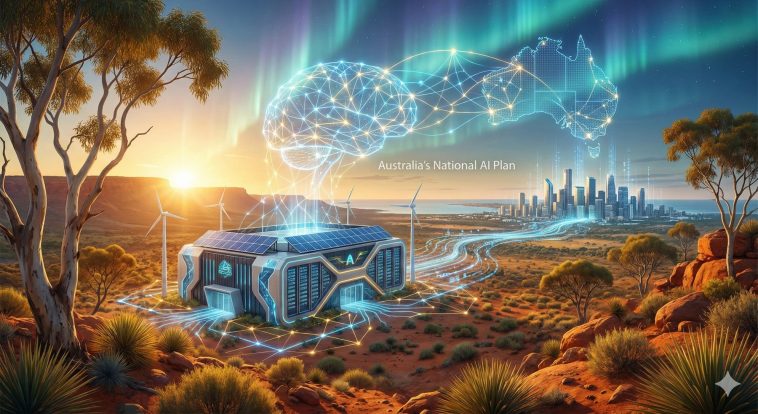
Today, the Australian Government has officially launched its National AI Plan. After months of industry consultation, a cabinet reshuffle that saw Tim Ayres take the reins of the Industry and Science portfolio, and tension between safety advocates and tech optimists, we finally have a roadmap.
The policy documents released this morning detail how Australia intends to navigate the rapid evolution of artificial intelligence. For the local technology sector, the release brings a welcome end to the uncertainty that has hovered over the industry for the last two years.
But what is perhaps most surprising is the direction the government has chosen. Rather than a heavy-handed regulatory approach, the government has opted for a strategy that prioritises adoption and infrastructure. The plan aims to balance the need for innovation with public safety, avoiding the strict “EU-style” guardrails that many tech leaders feared would stifle local development before it even began.
The message from Canberra is clear: the “doom and gloom” phase is over. It is time to build.
The objective: Smart adoption over strict restriction
The National AI Plan is built around three core goals: capture the opportunities, spread the benefits, and keep Australians safe.
– Advertisement –
It represents a significant pivot in rhetoric. Twelve months ago, the global conversation was dominated by existential risk and terminator scenarios. Today’s policy views AI primarily as a lever for economic productivity.
The government has explicitly rejected the idea of a standalone AI Act similar to the European Union. Instead, they are betting on a “light-touch” regulatory environment. This means relying on our existing consumer, privacy, and copyright laws to police bad behaviour, rather than creating a massive new bureaucracy to police the technology itself.
To manage the specific risks of AI – like bias in algorithms or deepfakes – the policy confirms the establishment of the AI Safety Institute, backed by A$29.9 million in initial funding.
Scheduled to become operational in early 2026, this body will not be a regulator with enforcement powers. Instead, it will act as an expert advisory group. Its job is to look under the hood of high-risk AI models, test emerging technologies, and advise government agencies on what is safe to deploy.
“The National AI Plan is about making sure technology serves Australians, not the other way around. This plan is focused on capturing the economic opportunities of AI, sharing the benefits broadly, and keeping Australians safe as technology evolves.”
Minister for Industry and Science Tim Ayres
Deep dive: The energy co-requisite
Perhaps the most tangible – and impactful – policy in the entire plan is the introduction of a co-requisite energy mandate.
We have known for some time that the AI boom is effectively an energy boom. Training a single large language model can consume gigawatt-hours of electricity, and the data centres required to host them are thirsty beasts. The government’s own data suggests that data centres, which currently consume about 2% of Australia’s grid energy, could devour up to 12% by 2050.
To prevent this from derailing our net-zero targets, the government is linking new data centre approvals to renewable energy investment.
While the specific technical principles will be detailed in early 2026, the core tenet is simple: if a hyperscaler like Amazon, Microsoft, or Google, or a data centre operator like NEXTDC or AirTrunk wants to build a massive new facility, they cannot just plug into the existing grid. They must invest directly in new renewable generation – wind, solar, and battery storage – to offset their load.
This is a clever piece of policy engineering. It effectively privatises the cost of grid expansion for these specific assets. It tells the tech giants that they can have their compute, but they have to help us build the power plant to run it.
Given Australia’s abundance of land and solar resources, this turns a potential liability into a competitive advantage. We could become the place where green AI is trained and hosted. It acknowledges that the future of digital infrastructure is inextricably linked to the future of energy infrastructure.
Sovereign capability: The GovAI platform
While the commercial sector gets a green light to innovate, the public sector is getting its own dedicated infrastructure. The plan offers fresh details on GovAI, a secure, whole-of-government platform delivered by the Department of Finance and the Digital Transformation Agency.
The government has recognised a critical risk: vendor lock-in. If every government department signed its own deal with OpenAI or Microsoft, the taxpayer would be paying a fortune, and our data would be scattered across various proprietary clouds.
GovAI acts as a central gateway. It is designed to allow public servants to use generative AI tools while ensuring sensitive government data remains on Australian soil and is handled in a secure environment.
A key deliverable here is GovAI Chat, a secure alternative to public tools like ChatGPT. Trials for this internal tool are scheduled to begin in April 2026.
This builds on the Australian Public Sector AI Plan 2025, which was released quietly last month, which mandates that all government agencies must appoint a Chief AI Officer and ensure their staff undergo foundational AI literacy training. The days of shadow IT – where public servants paste sensitive policy drafts into ChatGPT to summarise them – are coming to an end.
Commercialisation: The AI accelerator
For the startup ecosystem, the “Future Made in Australia” branding is finally getting some substance. The plan announces an AI Accelerator funding round through the Cooperative Research Centres Projects program.
This is not just free cash for anyone with a .ai domain name. The program is specifically designed for industry-led research collaborations. It aims to take Australian research from the lab and turn it into a commercial product.
The focus here is on high-value solutions in sectors where Australia already has a competitive edge, such as healthcare, agriculture, and mining.
For example, an Aussie ag-tech startup using computer vision to spot weeds in wheat fields would be a prime candidate for this funding. It is about applying AI to the physical world, rather than just building another chatbot. This aligns with the broader industry sentiment that Australia’s opportunity lies in applied AI rather than foundational AI.
Who this impacts
For companies like NEXTDC, AirTrunk, and the hardware giants like Nvidia and AMD, this policy is a mixed bag. The certainty is excellent – they know the government isn’t going to ban their core product. However, the co-requisite energy mandate adds a layer of capital complexity to every new project.
We will likely see a surge in partnerships between tech companies and renewable energy developers. Don’t be surprised to see major solar arrays in regional NSW funded directly by tech giants in the coming years.
For the venture capital community, the light-touch regulatory stance is a massive relief. Investors now know they won’t face a sudden legislative cliff-edge. The focus is on high-risk settings, leaving the vast majority of the B2B SaaS market relatively unencumbered. This should unlock capital that has been sitting on the sidelines, waiting to see if Australia would follow the EU’s restrictive path.
The plan also places a heavy emphasis on skills. The Future Skills Organisation has been tasked with ensuring our training systems are actually teaching the skills the industry needs. For the average worker, this means AI literacy is about to become as standard on a resume as word processing skills were ten years ago.
The timeline gap: A realistic assessment
If there is a valid criticism of the National AI Plan, it is the timeline. The AI Safety Institute opens in early 2026, energy principles are detailed in early 2026, and GovAI Chat trials start in April 2026.
In the world of traditional government policy, a four-month lead time is lightning fast. In the world of Artificial Intelligence, it is an eternity.
By April 2026, the AI landscape will look vastly different. OpenAI, Anthropic, and Google are releasing model updates on a near-quarterly basis. There is a very real risk that by the time the AI Safety Institute hires its first staff member, the models they are testing will be two generations old.
Furthermore, the funding for the Safety Institute – A$29.9 million – seems modest when compared to the billions being poured into AI safety by the US and UK governments. It reinforces the reality that Australia is a consumer of this technology, not a primary creator. We are relying on the heavy lifting being done overseas, while we focus on safe implementation locally.
“We want to see digital infrastructure not only serve the development of AI, but also support our energy future. Key co-requisites for data centre investment will include additional investment in renewable energy generation and water sustainability,”
Minister for Industry and Science Tim Ayres
Can we actually catch up?
Realistically, Australia was never going to win the foundation model race. We don’t have the deep capital markets of Silicon Valley or the sheer scale of the US market.
What this policy does is acknowledge that reality. It positions Australia as a fast follower. By not over-regulating, we keep the door open for local startups to build the application layer – the tools that solve actual problems for Aussie businesses using the intelligence provided by the big US models.
By mandating renewable investment, we are trying to turn our geography into a hosting advantage. If we can provide the cleanest, cheapest power for AI compute, we will attract the infrastructure investment.
It is a pragmatic plan. It lacks the moonshot ambition of building an Australian LLM to rival the world’s best, but it avoids the trap of building a white elephant. It moves us from consultation mode to action mode, and for an industry that thrives on certainty, that is a win.
For more information, head to https://www.industry.gov.au/NationalAIPlan






GIPHY App Key not set. Please check settings