 Mr Viral
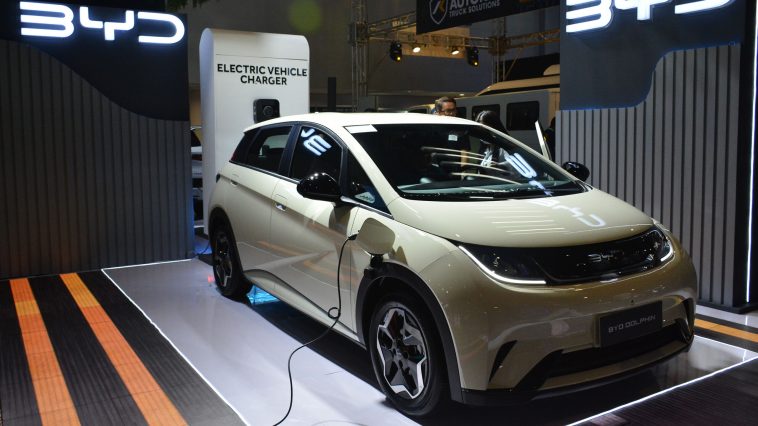
The federal government is considering scrapping tariffs on Chinese electric vehicles (EV), a move that could bring more affordable EVs to the country but may also hurt the existing auto sector.
Per CTV News, Agriculture Minister Heath MacDonald said on Sept. 9 that the government was reviewing a decision to scrap or reduce EV tariffs. The review comes a year after Canada imposed a 100 per cent tariff on Chinese EVs. The tariff removal could come as part of a larger response to China’s 100 per cent tariff on Canadian canola.
Canada imposed the EV tariff to protect local automotive manufacturing. But many things have changed since then, such as U.S. President Donald Trump’s tariffs on Canada and attacks on Canadian sovereignty, as well as collapsing EV sales.
Statistics Canada released numbers on Sept. 8 showing a 39.2 per cent drop in new fully electric vehicle sales and pointed to the end of EV incentive programs in many parts of the country. Earlier this year, the federal EV incentive ran out of funds and in June, we learned that the government was considering a new approach to the EV rebate.
However, Prime Minister Mark Carney delayed the government’s plan to require a certain number of new vehicles sold in 2026 to be EVs, and a broader review of the current EV mandate. The mandate aimed to have every new vehicle sold in Canada be zero-emission by 2035. The delay was a response to the U.S. tariff situation.
No good options
The EV incentive program helped make EVs more affordable for Canadians. But while the end and uncertain future of the program likely contributed to falling EV sales, it’s not the whole story. Trump’s tariffs are hitting wallets hard. For example, new and used vehicle prices are expected to rise because of the impact of tariffs. Plus, there are very few low-cost EVs — CTV notes that there aren’t many EVs available for less than $45,000 in Canada.
There’s also the Elon Musk factor. Tesla vehicles were among the best-selling EVs in Canada, but Musk’s close association with Trump, not to mention his controversial political beliefs, really soured Canadians on Musk and the Tesla brand. Couple that with Tesla jacking up vehicle prices after the EV rebate went away, and it’s hardly a surprise Tesla sales collapsed. (And that’s to say nothing of Tesla’s myriad other problems.)
This all leaves prospective Canadian EV buyers in a bad spot. There’s no rebate to help with the cost, and few affordable EV options are available, and one of the most widely available EV options is associated with a controversial, ultra-wealthy, far-right figure. So it makes sense that a Nanos Research survey cited by CTV found that 62 per cent of respondents were somewhat or fully in support of dropping a tariff on Chinese EVs.
Part of the concern about these EVs and why they were tariffed in the first place was their incredibly low cost, with some models priced as low as about C$14,000 (not counting tariffs or other added costs, like shipping).
Flooding the market, or sparking competition?
There’s real fear that lifting the levy on Chinese EVs could see the Canadian automarket flooded with low-cost EVs, with industry experts telling the Toronto Star that it would be an “existential threat” to the Canadian automotive industry. It may even spark retaliation from the U.S. as it may jeopardize major American automakers who, so far, have not really had to compete with Chinese EVs thanks to protective measures like tariffs.
Experts speaking to the Star used Mexico as an example of the impact of Chinese EVs. Five years ago, roughly four per cent of the vehicles sold in Mexico were EVs, and now it’s roughly one-third of new vehicles, prompting Mexico to raise its tariff on these EVs from 20 to 50 per cent.
There are also concerns that Chinese EV makers don’t source materials or parts from Canada, which could have knock-on effects in other industries, as well as worries about the potential impact on Canada’s nascent homegrown EV makers.
While there are concerns on both sides, it’s clear that something must be done. There is Canadian appetite for cheaper EVs — anecdotally, an EV would be perfect for me but there are no options within my budget. But American automakers are unwilling or unable to offer affordable EVs. I also question how much sense it makes for Canada to continue hitching its wagon to the U.S. given how Trump and his backers have acted. Perhaps reducing the tariff on Chinese EVs could spur competition in the auto sector and result in more affordable options for Canadians from various manufacturers.
Or, even better, maybe the Canadian government can start investing more in Canadian-made public transportation to reduce the need for expensive new vehicles, EV or otherwise.
Header image credit: Shutterstock
MobileSyrup may earn a commission from purchases made via our links, which helps fund the journalism we provide free on our website. These links do not influence our editorial content. Support us here.






GIPHY App Key not set. Please check settings