 Mr Viral
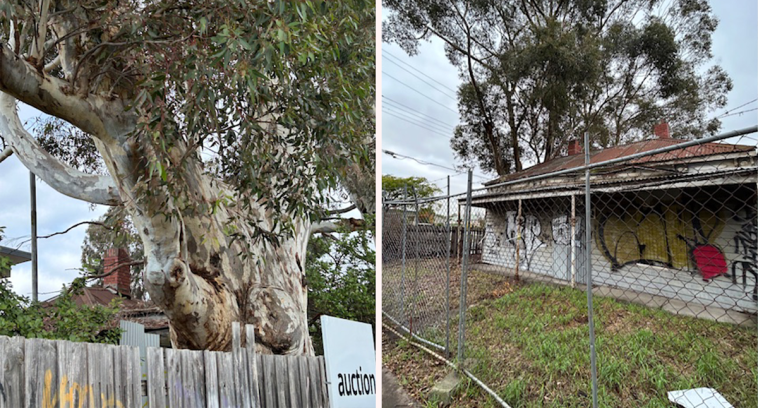
Towering above a graffiti-covered timber fence and a grim, boarded-up house is a natural “landmark” a small Aussie community doesn’t want to lose. They’re determined to fight a plan to axe two towering eucalyptus trees that can be seen from almost anywhere in the increasingly urbanised Melbourne suburb of Thornbury.
Local woman Rebecca Hart has been working to save the twin sugar gums, which are estimated to have grown on the corner block for over a century. “They’re majestic. Looking at them takes you somewhere else. These landmarks have stood tall regardless of all the development that’s happened here,” she told Yahoo News.
Trees of this size are increasingly rare in Australia. And Hart is concerned that approval to axe these two giants could create a precedent which could result in her suburb becoming increasingly denuded of nature.
Looking generally at large tree removal in urban centres, public safety is often a concern, with councils fearing they’ll drop branches on cars or pedestrians. Other times, it’s the residents themselves who want the trees gone – across Sydney’s extravagant waterfront suburbs, there’s a problem with people illegally poisoning them to reap the benefits of an improved view of the ocean.
But in the case of the Thornbury trees, it’s a development plan that’s putting the trees’ future in doubt. Darebin Council confirmed with Yahoo that it has “recently” received an application to remove them and that it’s aware of “significant community interest” in the trees.
Related: 🌳 Toorak resident’s $100k tree complaint to council
The massive trees are filled with small hollows and provide habitat for native animals and birds. Source: Supplied
The block has sat derelict for years, so it’s understandable that its recent sale has resulted in a plan to revamp the site. Anyone wishing to live there could argue they’re concerned about the size of the trees on such a small block. Eucalyptus trees are known to drop branches, and living underneath them can be scary when they sway in the wind.
Council maintains large trees only removed as ‘last resort’In an email, council CEO, Michael Tudball, said the full assessment process required to determine the future of the trees is not yet complete, and decisions normally take eight to 12 weeks. “We want to emphasise that removal of significant trees is only ever granted as a last resort where other mitigations aren’t possible,” he added.
Hart would like to see her council introduce a register of significant trees, as was proposed back in 2013. However council maintains one isn’t needed because local laws give trees added protection when they are over 8 metres high and have a circumference of more than 100cm at 1.4 metres above the ground.
The two tree trunks have a diameter of approximately 3.7 metres and 3.9 metres at their base and reach higher than 8 metres, meaning they qualify under local laws as significant trees, but this doesn’t ensure they will be spared. Looking generally at council guidelines, a case can be made to remove significant trees if they pose an immediate danger to people or property, and there’s a replacement landscaping proposal that’s deemed acceptable.
🥺 Rare colour footage of extinct Australian animal seen again after 90 years
❄️ Australia’s sky could change forever after winter ends
🍽️ Major menu change for Aussie diners
Trees provide rare shelter for suburb’s native animalsHart says the removal of the trees would not only alter the face of her suburb, local wildlife will be robbed of somewhere to live.
In Melbourne, hollow-bearing trees are a rarity, and that’s led to localised extinctions of species you regularly see in other cities like the kookaburra.
The Thurnbury trees are known to have several hollows, and their branches provide shelter for native birds and mammals including ring-tail possums, wood ducks, lorikeets, magpies, butcherbirds, and bees.
“In Thornbury, if you’re looking west they are the most significant part of the skyline,” Hart said. “Last night, the trees were silhouetted with a crescent moon behind them. They’re the biggest, most beautiful thing you can see.”
Love Australia’s weird and wonderful environment? 🐊🦘😳 Get our new newsletter showcasing the week’s best stories.





GIPHY App Key not set. Please check settings