 Mr Viral
In comparison to some other big names in the global acoustic guitar market, Taylor is still the new kid on the block—a company that challenged traditional building techniques and expectations for how a flattop should play and sound. Yet more than half a century has passed since its founding, and its headstock has long been at home among the guitar establishment’s biggest marques. When your brand built its reputation on defying convention, can you really get set in your ways?
The new Gold Label series suggests not. Characterized by the company as having “an old soul,” the collection debuts two body styles: the reimagined, deeper-bodied Grand Pacific and the all-new Super Auditorium. Both models come in natural or sunburst finishes with Honduran rosewood back and sides, while the Super Auditorium is also available in koa, all paired with a torrefied Sitka spruce top for an aged-in feel and enhanced responsiveness.
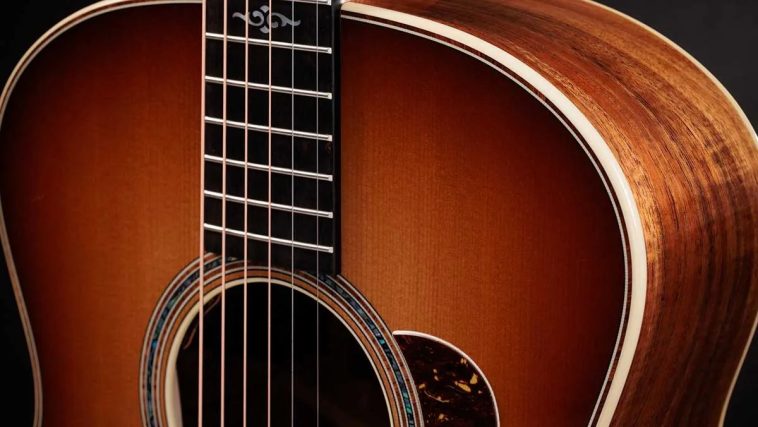
For this review, I spent time with the 814e Koa SB, a Super Auditorium model. From the first chord, it had the refined playability Taylor is known for, paired with a warmer, fuller voice—rounder and deeper than I usually associate with the brand, yet still clear and balanced.
Courtesy of Taylor GuitarsCourtesy of Taylor GuitarsShape ShiftingThe most obvious difference between the Gold Label series and other Taylors is the new body shape. Similar in proportion to the Grand Auditorium, the Super Auditorium is slightly longer with a wider lower bout, inspired by classical guitar curves. The non-cutaway design adds to the traditional vibe and gives the guitar a more substantial visual presence onstage or in the lap. Inside, a variant of Taylor’s V-Class bracing uses a fan-like pattern in the lower bout, set with traditional hot hide glue for improved energy transfer.
Also new is a long-tenon neck joint designed to enhance wood coupling and low-
end resonance, aiming for the warmth of a dovetail while staying glueless for precise adjustment and easier repair. This design incorporates Taylor’s new Action Control Neck, which lets you fine-tune the string height in seconds with a simple turn of a screw through the soundhole. It not only maintains optimal playability as conditions change but also contributes to the guitar’s lively, resonant feel.
The Gold Label felt light and well balanced for a big guitar, with none of the shoulder fatigue I sometimes get from larger bodied instruments. Its satin-finished mahogany neck with West African Crelicam ebony fretboard felt instantly familiar, thanks to the shallow profile that makes Taylors so popular with electric players, along with a 1.75-inch nut width that offers comfortable string spacing. The 25.5-inch scale gives articulate attack, and the low action and fretwork are predictably excellent, encouraging long playing sessions without strain.
Appointments are elegant but restrained: mother-of-pearl inlays, grained ivoroid binding, a sunburst gloss finish with purfling offsetting Honduran rosewood and black inlays, and a faux tortoise pickguard engraved with a Continental motif echoing the inlays.
The Honduran rosewood “curve wing” bridge houses a micarta compensated saddle and bone pins with abalone dots; the nut is Tusq. Gotoh 510 tuners in antique chrome feature ebony buttons—a subtle touch that ties the look together. Even the Taylor Deluxe Hardshell case gets a tweak, with a British Cocoa vinyl exterior and Graphite interior that looks sharp and feels rugged.
Courtesy of Taylor GuitarsSound EngineeringTaylor set out to enhance the low end, increase sustain, and expand dynamic range—and delivered on all three. But it’s not simply a matter of louder lows or longer notes. There’s more body across the spectrum, from bass through upper mids, tying the registers together without sacrificing detail. Where some big guitars have a detached thump in the bass, the Gold Label’s lows feel fully integrated and musically connected to the treble.
The guitar responds beautifully to touch. Fingerstyle playing can be warm and rounded with the pads or crisp and detailed with the nails. Plucking up on the string (just short of snapping) makes it speak with authority; snapping produces a punchy tone less metallic than you’d expect from a flattop. The instrument seems to reward dynamic variation—digging in with the right hand yields a satisfying growl, while a gentle stroke coaxes out a sweet, singing quality.
Chords remain clear, with lovely thirds and tenths that some guitars blur, even under heavier attack. Arpeggios show the same low-to-high balance across the neck. My go-to G chord scale test—with the G string open and the D and B strings changing through variations—sounded superb, with every note ringing true.
With a flatpick, the guitar is articulate, clear, and strong—equally adept at single-note leads and full, brassy chords. I tend to test a guitar’s headroom by working gradually from a medium strum to the heaviest attack I can muster. Many guitars eventually flatten out or lose clarity; the Gold Label kept giving me more volume and harmonic complexity without breaking up. The range from rich and responsive at a light touch to room-filling at full strum is as wide as I’ve experienced from a Taylor.
Sustain impresses not so much for how long it lasts, but for where it lives—closer to the body of the note than just in the shimmering overtones, especially in the lows and low mids. Play an E on the D string, let it ring, or hammer it on without plucking, and you’ll hear it.
The Gold Label comes equipped with L.R. Baggs Element VTC electronics, with discreet volume and tone controls hidden in the soundhole. Much of the guitar’s harmonic sustain carries through when amplified, retaining its acoustic timbre and character.
Courtesy of Taylor GuitarsThe Bottom LineTaylor calls the Gold Label series a tribute to early- and mid-20th-century flattops, unlike anything the company has produced. I wouldn’t go that far—the playability, practicality, serviceability, and clarity are pure Taylor, while the fuller tonal spectrum and added warmth set it apart. If you already like Taylors, this one’s worth adding to your collection. And if you’ve found them too clean or bright, the Gold Label’s tone just might change your mind.
Courtesy of Taylor GuitarsSpecsBODY Super Auditorium size; torrefied Sitka spruce top; fanned V-Class bracing with tonal rout; Hawaiian koa back and sides; grained ivoroid binding; custom single-ring rosette with bound soundhole; Honduran rosewood bridge with white micarta saddle and bone pins; ivoroid/tortoise engraved pickguard; gloss Golden Brown sunburst top, natural gloss back and sides
NECK Neo-tropical mahogany; long-tenon bolt-on, standard-carve profile; 25.5″ scale; West African Crelicam ebony fretboard with mother-of-pearl Continental inlays and ebony binding; 1-3/4″ white Tusq nut; West African Crelicam ebony peghead veneer with matching inlay; paddle peghead; Gotoh 510 antique chrome tuners with ebony buttons; satin neck finish, gloss peghead finish
OTHER L.R. Baggs Element VTC electronics; D’Addario XS Coated Phosphor Bronze Light strings (.012–.053); Gold Label hardshell case
MADE IN USA
PRICE $4,999
taylorguitars.com






GIPHY App Key not set. Please check settings