 Mr Viral
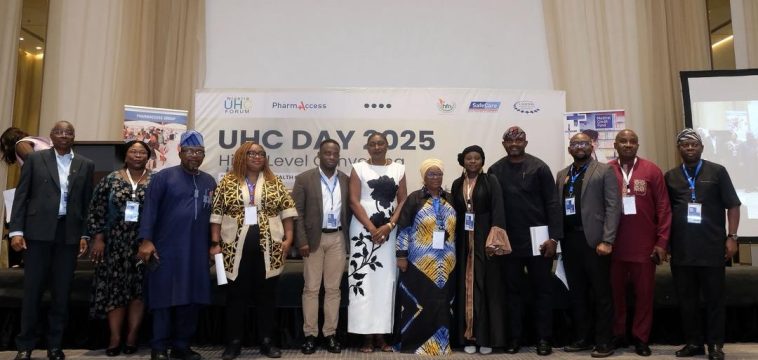
Stakeholders in the health sector have warned that the country risks a deeper crisis unless urgent reforms are carried out to strengthen primary healthcare, improve funding and raise service quality.
The concerns were raised on Thursday at the 2025 Universal Health Coverage Day commemoration organised by the Nigeria UHC Forum in partnership with PharmAccess Foundation. The event was held under the theme, “Unaffordable Health Costs? We’re Sick of It!”
Speaking at the event, the President of the Healthcare Federation of Nigeria (HFN) and PharmAccess Country Director, Mrs Njide Ndili, said Nigeria would need structured collaboration between government and the private sector to achieve universal health coverage.
According to Ndili, the private sector remains sidelined in health planning despite its role in service delivery.
She said, “The private sector is often left out, and government is the regulator, is always in the lead, but HFN in Africa is now pushing an agenda, which is to create a pathway for the private sector to support government, because it is one system and one goal.”
She warned that declining development funding and limited government resources make private sector involvement unavoidable. Ndili listed power shortages, weak supply-side quality and low public trust as major barriers slowing progress.
She added, “at least 50 percent of hospitals have no power,” noting that meaningful improvements in care quality would remain difficult without basic infrastructure.
Ndili cited examples from Delta State where private operators revived abandoned primary healthcare centres and recorded safer deliveries with zero maternal deaths. She said the experience showed what could be achieved when partnerships were properly structured and sustained.
Also speaking, the Director of Standards and Quality Assurance at the National Health Insurance Authority, Dr. Yakubu Agada-Amade, outlined recent progress under the Basic Health Care Provision Fund. He said the upgraded BHCPF 2.0 was expanding access to services at the primary care level.
According to Agada-Amade, the number of PHCs supported under the fund has increased from about 8,800 to more than 11,000 across the country.
He said facilities now receive quarterly payments of between ₦600,000 and ₦800,000, tied to performance indicators aimed at improving accountability and service delivery.
Agada-Amade added that many centres had benefited from infrastructure upgrades, including improved electricity supply and basic equipment, as part of a national plan to establish 17,600 fully functional PHCs by 2027. He said BHCPF 2.0 also supports staffing, allowing states to deploy midwives and community-based health workers to address workforce shortages.
Representing the Executive Secretary of the Gombe State Primary Health Care Development Agency, Dr Abdulrahman Shuaibu, Mrs Joy Daudu Bako said the focus of the UHC drive was to ensure that no Nigerian was excluded from care.
She said, “The aim is to see how everybody is going to be covered with healthcare, the poor, the vulnerable, the downtrodden. Everybody should have access to quality healthcare. It’s not just about having access to healthcare, but healthcare should be qualitative.”
Bako stressed that progress towards UHC would depend on collective action. She said government, the private sector, civil society groups, philanthropists and political leaders must work together to expand health insurance enrolment.
She added, “Everybody, all hands must be on deck, because currently in Nigeria, a lot of our population is not enrolled, and this is why we are working to see how we can push this narrative to change for better.”






GIPHY App Key not set. Please check settings