 Mr Viral
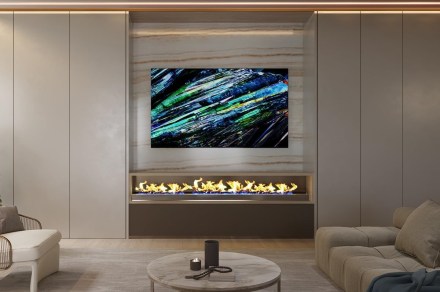
If you’re going to buy a new TV, it’s worth doing it right and buying one of the best TVs. That doesn’t mean just buying the most expensive, though. While the best OLED TVs might command a premium for their amazing contrast and responsiveness, they’re not the only options out there. The best QLED TVs have gained real ground on the top OLED models in recent years, giving them serious competition and often at more affordable prices.
But whether you’re thinking of QLED, OLED, big, small, something for movies, games, or a bit of everything, the best TV brands have something for you. Here are our best TVs you can buy right now, from Samsung, Sony, LG, Hisense, and more.
Sony A95L QD-OLED
Best overall TV
Jump to details
Hisense U7N
Best budget TV
Jump to details
Panasonic Z95A
The best TV runner-up
Jump to details
LG OLED Evo G4
The best LG OLED TV
Jump to details
Samsung S95D OLED TV
The best Samsung TV for bright rooms
Zeke Jones / Digital Trends
The best Hisense TV you can buy
Hisense U8N
Pros
Intense brightness
Deep blacks/contrast
Vibrant, accurate color
Great sound
Cons
Overly bright HDR
Poor off-angle viewing
Specification:
Screen sizes available
55, 65, 75, 85 inches
TV type
mini-LED
HDR support
HDR10, HDR10+, Dolby Vision, HLG
Operating system
Google TV
Connectivity
2 x HDMI 2.1, 2 x HDMI 2.0, USB-A, optical, Ethernet
It’s getting harder and harder for us to call Hisense a “budget-friendly” brand. That kind of connotation just doesn’t line up with the type of picture and sound performance you’ll get from a Hisense set, especially if you’ve got your sights set on one of its U8 offerings.
Over the last couple of years, we’ve had the continued opportunity to review several Hisense sets, including a handful of its flagship models. The 2024 Hisense U8N is the newest addition to the Hisense family, and we were simply blown away by the picture quality and medley of features this bad boy brings to the table.
The U8N is a powerful TV that delivers a brilliant and colorful image in both SDR and HDR viewing modes. When measuring nit output for these settings, our reviewer measured peak brightness at 1,300 nits in SDR, with around 3,500 for specular highlights in HDR. There’s no doubting the fact that the U8N can get very bright, but it also delivers the kind of incredible contrast numbers that might fool some folks into thinking it’s actually an OLED set.
While it suffers a bit in the viewing angle department, if you can arrange your furniture appropriately, we have no doubt that the Hisense U8N is one of the best bright TVs on the market for 2024.
Hisense U8N
The best Hisense TV you can buy
Zeke Jones / Digital Trends
The best mini-LED you can buy
Sony Bravia 9
Pros
Super-clean picture
Deep blacks, minimal blooming
Excellent contrast
Searing HDR highlights
Excellent motion handling
Cons
Backlight fluctuations visible in dark rooms
Very expensive
Specification:
Screen sizes available
65, 75, 85 inches
TV type
mini-LED
HDR support
HDR10, Dolby Vision, HLG
Operating system
Google TV
Connectivity
2 x HDMI 2.1, 2 x HDMI 2.0, optical, Ethernet
The Sony Bravia 9 is one of the best TVs we’ve ever tested, bar-none; and quite frankly, we were expecting it to be amazing. This is because Sony has basically conditioned us to expect big things when a new premium TV hits shelves. In the case of the Bravia 9, Sony developed a new IC chip that allows the TV’s mini-LED lighting to be meticulously controlled, leading to some of the most accurate colors, contrast, and brightness levels we’ve ever seen from an LED-LCD.
In terms of overall picture quality, our own editor-at-large Caleb Denison thought the Bravia 9 actually did a nice job at striking the balance between a great mini-LED LCD TV and an OLED TV. That being said, because it’s an LCD set, the Bravia 9 performs best in brightly lit rooms and is a champ when it comes to reflection handling. From 4K movies and shows to next-gen gaming, your favorite content gets a solid boost in quality, thanks to Sony’s advanced picture processing and a full suite of HDMI 2.1 ports, which bodes particularly well for gamers who want a TV that delivers fast response time and excellent motion clarity.
One of the best ways to maximize the picture of the Bravia 9 is watching or playing HDR titles. Thanks to Dolby Vision support and compatibility with other leading HDR codecs, the Bravia 9 pushes deep blacks and bright highlights in a way we’ve never seen on an LCD set. Other noteworthy features include a pulse-pounding 70-watt, 2.2.2 audio system, Google TV for apps and streaming content, and VRR support for optimizing your next round of Call of Duty.
While we do wish the off-angle viewing and gray uniformity were a bit better, we’re thrilled to see the kind of precise engineering that went into the development of this 2024 TV.
Sony Bravia 9
The best mini-LED you can buy
Zeke Jones / Digital Trends
The best LG OLED for most people
LG C4 evo OLED
Pros
Excellent contrast
Rich color
Very good upscaling
Great for gaming
Accurate out-of-the-box settings
Cons
Weak audio system
Slight green tinge off-angle
Specification:
Screen sizes available
42, 48, 55, 65, 77, 83 inches
TV type
OLED
HDR support
HDR10, Dolby Vision, HLG
Operating system
LG webOS
Connectivity
4 x HDMI 2.1, 3 x USB-A, Ethernet, optical
Let’s not beat around the bush: The LG C4 OLED is one of the best TVs that LG has ever made, and we think most folks will agree. Sitting just one rung below the flagship LG G4 Series, the C4 is equipped with LG’s all-new a9 AI Processor Gen 7 that delivers some of the best picture processing and 4K upscaling we’ve ever seen from an OLED. And unlike its direct predecessor, the C3 Series, the C4 now includes Filmmaker Mode, giving you the kind of picture that a movie or show’s creative team intended for you to see.
Each of the C4’s HDMI 2.1 ports are fine-tuned for both console and PC gaming, so expect lightning-fast response times and low input lag. And because the C4 can handle up to a 144Hz refresh rate, feel free to use this bad boy as a big PC gaming monitor — it’s an excellent gaming TV. We’re glad to see that LG has only improved when it comes to HDR and SDR brightness, colors, and contrast.
We’re also glad to see another example of a TV company giving a little more consideration to its speakers. Not only is the C4 equipped with a 40-watt 2.2 speaker configuration, but thanks to the new A9 AI Sound Pro feature, your favorite movies, shows, games, and music can be up-mixed to 9.1.2 surround sound.
In years past, we’ve talked about how LG’s webOS streaming hub can be a little overwhelming; at least as far as layout and ad drops go. And while these interface elements could still use some love, we think webOS 24 runs smoother than ever before.
LG C4 evo OLED
The best LG OLED for most people
John Higgins / Digital Trends
The best TCL TV
TCL QM8 Series (2024)
Pros
Exceptional brightness levels
Great colors and contrast
Solid gaming optimizations
Google TV OS is fast and packed with apps
Cons
Not the best off-angle viewing
Colors will require some fine-tuning
Specification:
Screen sizes available
65, 75, 85, 98 inches
TV type
mini-LED
HDR support
HDR10, HDR10+, Dolby Vision, HLG
Operating system
Google TV
Connectivity
2 x HDMI 2.1, 2 x HDMI 2.0, USB-A, Ethernet, optical, 3.5mm
TCL has been a consistent achiever in the TV world, especially over the last couple of years. As a matter of fact, our own TV expert Caleb Denison gave considerable praise to the previous year’s TCL flagship QM8 Series, a mini-LED-driven QLED set with top-shelf brightness, colors, contrast, and motion clarity. For 2024, the new and improved QM8 brings a few meaningful changes to the table, namely enhanced brightness and a more advanced picture engine. TCL claims the new QM8 delivers double the illumination of its predecessor, with some sizes offering up to 5,000 local dimming zones.
Movie enthusiasts and gamers will love the new QM8’s picture processing and console optimizations. Each of the four HDMI ports is 2.1 certified, making this an excellent TV for lag reduction and fast response times. You’ll even be able to game at up to 4K/144Hz or 1080p/240Hz, though only one of the HDMI ports can do so. With support for leading HDR formats like Dolby Vision and HDR10+, the 2024 QM8 delivers vibrant highlights and solid black levels during dark scenes.
As for all things apps and games, the new QM8 returns to Google TV OS. This fast and intuitive platform gives you access to hundreds of streaming apps, free live TV, AirPlay capabilities, and smart home controls via Google Assistant.
Available in 65, 75, 85, and 98-inch sizes, the latest and greatest TCL QM8 Series is further proof that this fan-favorite TV maker shows no signs of stopping.
If the 65-inch model is the right size for you, definitely check out the deal at Walmart that will save you $450.
TCL QM8 Series (2024)
The best TCL TV
Zeke Jones / Digital Trends
The best midrange Sony TV
Sony Bravia 7
Pros
Bright and vivid
Excellent black levels/contrast
Extremely accurate HDR/Color
Top-tier motion/upscaling
Easy to use
Cons
Limited viewing angle
Poor reflection handling
Specification:
Screen sizes available
55, 65, 75, 85 inches
TV type
mini-LED
HDR support
HDR10, Dolby Vision, HLG
Operating system
Google TV
Connectivity
2 x HDMI 2.1, 2 x HDMI 2.0, USB-A, optical, Ethernet
We’ve sung the praises of the Sony Bravia 9 mini-LED, a premium TV for the ages that delivers a brilliant picture, complete with top-notch upscaling, terrific colors and contrast, and impeccable motion clarity. While Sony’s Bravia 7 Series sits a couple of rungs below the flagship Bravia 9, we’re still big fans of this midrange 2024 offering. Do keep in mind we’re not talking about the best LED set Sony has in 2024, so there’s definitely an issue or two that we’d like to get squared away.
First and foremost, this isn’t an excellent TV for off-angle viewing. If you happen to be placing it in a living room or media space where seating is spread around the entire room, guests sitting at the farthest ends (totally off-center with the TV screen) will see a less vibrant and colorful picture than those sitting closer to the screen’s center. We’re also not the biggest fans of the Bravia 7’s reflection handling, so this may not be the best TV for a brightly lit room. These grievances aside, our own TV expert Caleb Denison was impressed by how good this TV can look under optimal viewing conditions.
Expect incredible brightness levels, terrific colors and contrast, reliable image upscaling, and must-have gaming features like 4K/120Hz (on two HDMI ports), next to no input lag, and lightning-fast response times. The Bravia 7 is also loaded with Google TV version 12 for all things Netflix, AirPlay, and smart home.
And if you’re thinking you may want to spend more to get into the Bravia 8 Series, do keep in mind that the latter is actually an OLED TV. Is there a big difference between QLED versus OLED TVs? Our thoughtful comparison should settle the score.
Sony Bravia 7
The best midrange Sony TV
Frequently Asked Questions
What size 4K TV should I buy?
The answer to that depends on many factors, including your stylistic preferences, the size of the room, and how far away you’ll be sitting. Take a look at our guide to choosing the perfect TV size for you.
What should you be aware of when it comes to viewing angles for your TV?
If you want to enjoy your TV from a variety of viewing positions, you’ll need a TV with wide viewing angles. Of the two main LCD panel types (IPS and VA), IPS panels offer the greatest viewing angles. However, this can sometimes come at the cost of worse contrast. OLED TVs offer both excellent contrast and viewing angles, compared to their QLED counterparts, which are best watched from the center position.
What is QLED?
QLED stands for quantum dot LED TV, and it uses a layer of tiny particles to enhance an LED TV’s color accuracy without diminishing brightness. QLED TVs still don’t deliver the perfect blacks of OLED TVs, but the newest ones come very, very close. Because QLED TVs often have powerful backlights that use hundred (or in the case of mini-LED, thousands) of LEDs, they can get brighter than the brightest OLED TVs.
You may want to check out our article that covers QLED vs. OLED TV: What’s the difference, and why does it matter?
What is OLED?
OLED stands for organic light-emitting diode, and these TVs are notable for their ability to produce perfect blacks and what is sometimes referred to as “infinite” contrast. These TVs achieve this through their ability to completely shut down the light they emit on a pixel-by-pixel basis, something QLED TVs can’t do because they rely on a separate backlight to create brightness. You can block a lot of the light produced by a backlight, but not 100%.
What is the best Roku TV?
These are the best Roku TVs. Roku has also started manufacturing its own “Roku-made” TVs, which are on store shelves now.
How well does 4K TV upscaling work?
That depends on the TV, but as a general rule of thumb, the better (and more expensive) the TV, the better the upscaling.
Are budget 4K TVs any good?
Almost all new TVs are 4K, so there are plenty of fantastic options to choose from at the lower end of the pricing scale. Don’t expect a standard LED TV to rival an OLED or QLED, though — set your expectations accordingly. We recommend looking for a quantum dot LED TV (QLED) model, as these will offer the best picture quality at lower prices.
Can a 4K TV work well as a PC monitor?
Yes, so long as your computer has an HDMI output. Adapters can be used for other output types but frequently do not pass along audio.
Do 4K TVs usually have Alexa, Google Assistant, or Siri?
Most modern TVs can be paired with Amazon Alexa and Google Assistant through either an Amazon Echo, Fire TV, or Google Home device. Some televisions even have them built-in, eliminating the need for a smart speaker.
Right now, there are no TVs that have Siri built-in. Those that support AirPlay 2 and HomeKit, however, can be controlled using Siri on an iOS device, such as an iPad, iPhone, HomePod, or HomePod Mini, as well as a Mac.
Do 4K TVs have problems with burn-in?
OLED TVs are the only type of 4K TVs that have the potential to suffer from burn-in, though it’s incredibly uncommon. Unless you like to leave the same news channel playing for eight hours a day, seven days a week for weeks on end, you probably don’t need to worry about it.
How do we test TVs?
TVs are a big priority for us at Digital Trends, and our resident TV expert, Caleb Denison, puts all the best TVs from every TV manufacturer through their paces. Check out our detailed rundown of how we test TVs in our reviews.
Glossary of terms
Here’s a rundown of some of the most common terms associated with today’s TV technology.
4K Ultra HD
This refers to a display resolution that is four times that of 1080p HD. A 4K Ultra HD TV’s pixel resolution is a 3,840 x 2,160 grid in a 16:9 aspect ratio, resulting in nearly 8.3 million pixels. This increase in density adds striking detail and realism to an image and allows larger screens to be viewed from closer distances without individual pixels becoming visible.
High dynamic range (HDR)
High dynamic range is probably most familiar to people through the HDR mode on their digital cameras. It’s designed to deliver a picture that has greater details in the shadows and highlights, plus a wider range of colors. HDR in televisions pursues the same goal. The color palette is wider, blacks are deeper, and whites are brighter.
Presently, there are two major HDR formats: HDR10 and Dolby Vision, with a third — HDR10+ — beginning to show up on new models, particularly those from Samsung. The first is the HDR standard, but Dolby Vision offers a premium experience. Consider a TV that supports both. HLG (hybrid log gamma) is another recent addition to the HDR collection, which supports over-the-air (OTA) broadcast content with HDR.
Full-array local dimming (FALD)
This refers to an LED TV’s backlighting system. A FALD display contains an array of LEDs spread out in a grid behind an LCD panel, rather than just at the edges of the TV. This LED array is broken up into zones that can be dimmed when necessary to achieve better black levels. Another benefit is more uniform brightness across the screen.
Wide color gamut (WCG)
These are the expanded color reproduction abilities of a 4K Ultra HD TV, which are closer than ever to what we see in a digital cinema. By approaching (or sometimes exceeding) the Digital Cinema Initiative’s (DCI) P3 color specification, a 4K UHD TV can produce billions of more colors than a 1080p HD TV.
Quantum dots
A layer of film loaded with tiny nanocrystal semiconductors is placed in a TV’s display panel to help produce a more accurate array of colors. Quantum dots work by producing a purer form of white light from a TV’s backlighting system, which helps the TV’s color filter perform more accurately.
Phosphor-coated LED
An alternative to Quantum Dots, phosphor-coated LEDs have a chemical coating to alter the light’s output. When used in a TV, this results in a purer backlight that’s more easily manipulated by a TV’s color filter, resulting in a wide color gamut and increased color accuracy.
HDMI 2.1
The latest version of the HDMI spec. It offers new enhancements for video games like variable refresh rate (VRR) and automatic low-latency mode (ALLM) and the ability to pass 4K signals to the TV at up to 120Hz, for ultra-smooth motion. HDMI 2.1 is a requirement for 8K video sources like the PlayStation 5 and Xbox Series X. For most non-gamers, HDMI 2.1 is a nice way to future-proof yourself but it’s nowhere near a necessity yet.
HDCP 2.3
The latest version of the High-Bandwidth Digital Content Protection technology, which provides copy prevention specifically of 4K Ultra HD and 8K content. Any source device that requires HDCP 2.3 will require a TV with an HDCP 2.3-compliant HDMI port for a compatible connection.
HEVC (H.265)
Stands for “High-Efficiency Video Coding.” A compression technology developed to make large 4K UHD video files smaller and, therefore, easier to stream over broadband Internet connections. HEVC is said to double the data compression ratio over H.264, the predominant encoding technology used today for 1080p videos while retaining the same video quality. A smart TV or streaming set-top box must be able to decode HEVC to playback 4K Ultra HD video from sites like Netflix and Amazon Prime Video.
VP9
An alternative to HEVC developed by Google and used predominantly for encoding 4K Ultra HD YouTube videos. For a smart TV or streaming set-top box to play 4K Ultra HD YouTube videos, it must be able to decode VP9 videos.






GIPHY App Key not set. Please check settings