 Mr Viral
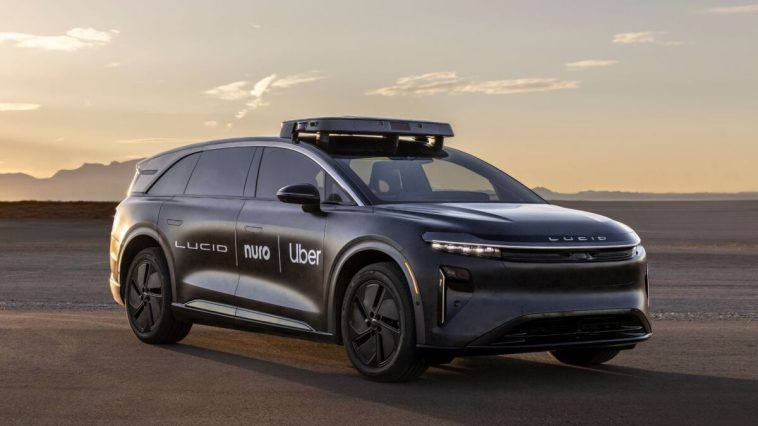
The first launch is coming to a major U.S. city next year.
By
Meera Navlakha
Meera is a journalist based between London and New York. Her work has been published in The New York Times, Vice, The Independent, Vogue India, W Magazine, and others. She was previously a Culture Reporter at Mashable.
Read Full Bio
on July 17, 2025
Share on Facebook
Share on Twitter
Share on Flipboard
The new Uber robotaxis could look like this.
Credit: Uber / Lucid
Uber has announced a multi-million dollar partnership with U.S. electric vehicle maker Lucid and robotics company Nuro. The three companies plan to deploy at least 20,000 robotaxis “in dozens of markets around the world” over the next six years, starting in a major U.S. city in 2026.
The ride-share app announced the news on Thursday, saying that the Lucid vehicles will be owned and operated by Uber or its third-party fleet partners. The vehicles, which will be equipped with technology developed by Nuro, will be available to riders “exclusively” via the Uber platform, as per the company’s press release.
As a part of the deal, Uber is investing $300 million in Lucid and an undisclosed — but “significant” — amount in Nuro, according to the Financial Times.
Uber said the collaboration between the three companies will “[deliver] a fully integrated robotaxi experience developed for comfort, safety, and scale.”
Mashable Light Speed
“Autonomous vehicles have enormous potential to transform our cities for the better,” said Dara Khosrowshahi, CEO of Uber. Khosrowshahi said the partnership will “safely bring the magic of autonomous driving to more people across the world.”
Nuro will lead the safety efforts behind building the vehicle, using simulations, supervised on-road testing, and closed-course testing.
The move crystallizes Uber’s intention to make its mark in the world of autonomous vehicles, which could have big implications for the thousands of gig workers who book rides through Uber. Just yesterday, the company announced a deal with Baidu, a company that runs one of the largest robotaxi fleets in China. The two are partnering up to deploy robotaxis across Asia and the Middle East, with a potential expansion to Europe.
Tesla has also been testing its own robotaxi service, most recently in Austin, Texas.
Meera is a journalist based between London and New York. Her work has been published in The New York Times, Vice, The Independent, Vogue India, W Magazine, and others. She was previously a Culture Reporter at Mashable.
These newsletters may contain advertising, deals, or affiliate links. By clicking Subscribe, you confirm you are 16+ and agree to our Terms of Use and Privacy Policy.





GIPHY App Key not set. Please check settings