 Mr Viral
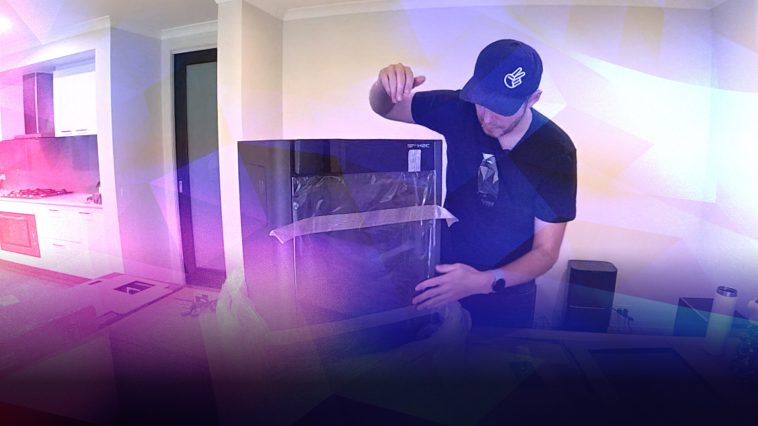
Bambu Lab has been shaking up the 3D printing industry for a few years now, and just when you think you’ve seen the peak of consumer desktop printing, they drop something that completely rewrites the rulebook.
While the speed and quality of 3D printers have improved dramatically in recent years, one pain point has always remained for multi-colour printing, and that is waste. If you’ve ever printed a multi-coloured model, you know the pain of the purge tower and the buckets of waste that pile up behind the machine.
It feels wasteful because it is, and it adds significant time to the print job. Enter the Bambu Lab H2C. This isn’t just an iterative update; it’s a fundamental shift in how we approach multi-material printing.
I’ve just taken delivery of the H2C, and I’m going to take you through the unboxing experience and my initial impressions of this absolute beast of a machine.
The first thing that hits you is the sheer scale of the packaging. It comes in a massive box, reminiscent of a large TV delivery, with those plastic tabs at the bottom that you pull to release the sides.
“Just the scale of this whole thing is kind of insane”
– Advertisement –
The care and attention, design and engineering of the packaging are almost as impressive as the machine itself. Bambu Labs knows this is a serious investment and contains glass panels and sensitive precision mechanics, so they’ve gone above and beyond to ensure it survives the courier network.
There are foam inserts tucked into every crevice, and cable ties securing the moving parts. While it’s a bit of a mission to remove it all, it’s also reassuring to see this level of care in the packaging. As you peel back the layers, the industrial nature of the H2C starts to reveal itself.
“It actually looks like an industrial piece of equipment to be honest, rather than something someone like me would have at home”
The build quality is immediately apparent; it feels solid, heavy, and purpose-built. This doesn’t feel like a toy or a hobbyist gadget; it feels like a manufacturing tool. The H2C features a fully enclosed chamber with glass panels, which not only looks premium but also enables prints to occur quietly, while also enabling better control over temperature fluctuations.
One of the standout features I noticed during the unboxing is the magnetic build plate. It snaps into place with a satisfying clunk, guided by serious magnets that ensure perfect alignment every time. But the real magic happens inside that chamber.
The headline feature of the H2C is the new Vortek Hotend Change System. Unlike previous systems that use a single nozzle and purge filament to change colours, the H2C actually swaps the entire hotend. On the right of the chassis, it features a carousel of hotends that it can switch between in as little as 8 seconds.
This means when it needs to change from red to blue, it doesn’t spend minutes flushing plastic through the nozzle; it simply drops the red hotend and picks up the blue one. This technology promises to reduce filament waste by up to 95%, which is a game-changer for anyone who prints large, multi-colour models. No more buckets of waste plastic, and significantly faster print times.
The innovation doesn’t stop at the toolhead. The H2C is packed with sensors, 59 of them to be precise, and a camera system that monitors everything from the nozzle to the chamber temperature.
I’m pretty sure it’s illegal to ship a product in 2025 that doesn’t use AI, so naturally, the H2C has AI on board. Bambu Labs leverage computer vision to detect print failures like spaghetti, nozzle clumping, and even “air printing” if the filament runs out or jams.
Speaking of filament, the H2C is designed to work seamlessly with the new AMS (Automatic Material System) setups, allowing for up to 24 different materials in a single print. The unboxing revealed the attention to detail Bambu Lab has put into the user experience.
There’s a large, phone-sized touchscreen on the front that acts as the control interface. It’s responsive and intuitive, giving you full control over the printer’s extensive features.
It’s clear that Bambu Lab is targeting the “prosumer” and professional market with the H2C. This isn’t just for printing trinkets; it’s for rapid prototyping and small-batch manufacturing.
The ability to swap nozzles also opens up the possibility of mixing nozzle sizes in the future, although for now, it supports mixing different materials and colours with the same nozzle size. I’m really excited to put the H2C through its paces, and you can expect a lot more content about the H2C, including a full review on techAU.
If you can’t wait for the review, the Bambu Lab H2C is available now in Australia. Pricing for the H2C Combo starts at A$3,699.
For more information, head to https://bambulab.com/en-au/h2c






GIPHY App Key not set. Please check settings