 Mr Viral
Yury Nikolaev/Shutterstock
We may receive a commission on purchases made from links.
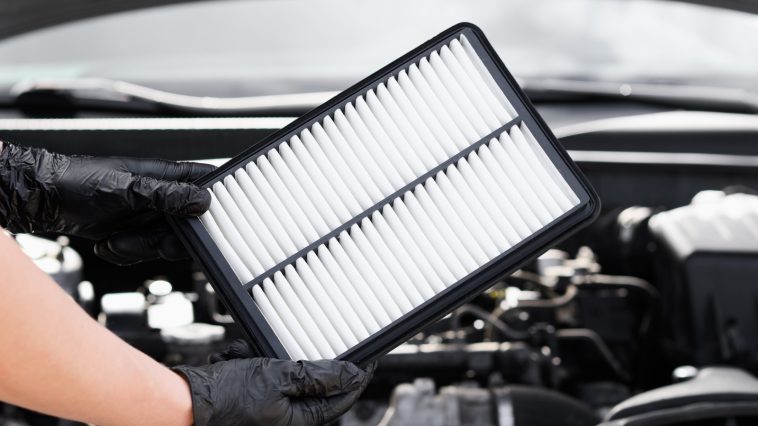
As car owners, we regularly track the miles driven and the oil changes our cars require, but one crucial component is often overlooked until it’s too late — the cabin air filter (CAF). Usually tucked behind the glove box or under the dashboard, the component is the first line of defense for the air you breathe inside your car. The primary job of the cabin air filter is to remove pollutants such as dust, soot, pollen, debris, fumes, insects, and other fine particulate matter (depending on the type of filter) from the outside air before it enters your car’s heating, ventilation, and air conditioning (HVAC) system.
It does this by trapping these particles in its microscopic pores or openings. High-end filters, such as those with activated carbon or HEPA filtration, can even capture odors and microscopic irritants. But as you keep driving, the filter gradually fills with thousands of miles worth of pollutants, eventually reaching saturation and blocking airflow into the HVAC system. Most drivers don’t notice until symptoms start showing, but by then, it is often too late.
A clogged air filters impacts your health and your car’s performance
Kinek00/Getty Images
If you don’t replace the cabin air filter in time, it could affect your comfort and health. The thick, compacted dirt and debris stuck in the filter, along with the moisture drawn in by the air conditioning system, turn the filter into an incubator for bacteria and mildew, a self-sustaining petri dish if you may. This leads to a stale or foul odor in the car, making your ride much less comfortable.
Furthermore, the little air that passes through the cabin filter could contain copious amounts of dust, pollens, or other allergens that could irritate your eyes or throat, trigger allergies, or make every drive feel stuffy and suffocating. Beyond affecting the air quality and your health, a clogged air filter could also affect your car’s HVAC system.
A choked cabin air filter doesn’t let enough air pass through, resulting in poor airflow to the blower motor, forcing it to work significantly harder to pull air through the buildup. This reduces the airflow, even at maximum speed. Furthermore, forcing the motor to run at peak capacity under much higher resistance could cause permanent damage, resulting in costly repairs.
Don’t let a $20 part cost you more
Jitti Narksompong/Getty Images
Using the same cabin air filter past its life can directly affect your car’s performance. In the summer, your HVAC system could take longer to cool the cabin, and in the winter, it may take frustratingly long to defrost or defog the windshield, both due to insufficient airflow.
To summarize, not replacing your cabin air filter in time can affect your ride’s comfort, the HVAC system, and your health. Hence, you should have it replaced every 5,000 to 15,000 miles, or earlier if your driving conditions are harsh. If your daily commute is on dusty gravel roads or through heavy traffic, make it a habit to check your cabin air filter annually.
The cost of a new cabin air filter depends on its type. The basic ones like this one from Motorcraft (usually made of paper or a similar material) retail for $10 to $20. Bosch or other higher-quality filters, with activated carbon, and HEPA filtration, cost slightly more, around $20 to $30. Luxury vehicles, or those that require a specific OEM filter, could cost even more. Given the cost of HVAC repairs, replacing the cabin air filter on time is among the cheapest preventive maintenance you can do to keep your ride comfortable.





GIPHY App Key not set. Please check settings