 Mr Viral
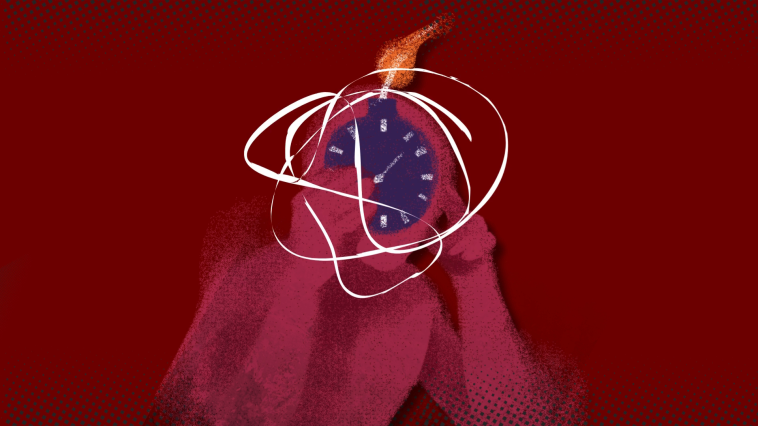
India’s booming music economy is built on fragile, often toxic, and largely unregulated systems where basic dignity comes last
Artwork by Sharanyaa Nair
Last month, this column raised the issue of safety at music events, for crew, attendees and artists alike, highlighting how the “music industry is built on fragile, informal ecosystems—freelancers, indie promoters, short-term contracts—where power dynamics skew heavily towards those in charge.”
On a recent podcast episode of tech and culture platform Mashable Middle East, Mumbai-origin, Dubai-headquartered event company Ferriswheel Entertainment’s founder Shubhra Bhardwaj made a rather tone-deaf admission about how she “sacrificed” her personnel at an event in Hyderabad to keep it going until 3 am (which is prohibited by law for music events in India).
The now-deleted video, viewed by Rolling Stone India, shows Bhardwaj casually (and happily) admitting to sending off event security staff, bartenders of the venue, and even stage managers to be “picked up” by police in Hyderabad and later paying their bail to have them released from detention. The conversation was picked up by a few Indian promoters who were appalled at the bluntness with which event companies treat on-ground crew for the “show-must-go-on” approach.
This is not entirely new in India’s haphazardly evolved live events industry. Given the way gig organizers take calls in high-stakes situations, this Hyderabad case may not even be an anomaly, but an open admission of what has perhaps always been taking place for years now. If you zoomed out a bit further, India’s music industry on the whole—from labels to event companies to music schools, artist management firms, venues, music tech platforms, and more—is not without its share of bad apples.
According to a new report by workforce solutions company NLB Services, India’s concert economy is estimated to generate nearly 12 million temporary jobs by 2030–2032, creating demand for production, logistics, security, hospitality, and digital media staff.
This often-lauded “concert economy” that even governments are now flogging may create millions of jobs, but most of those will be low-protection, temporary gigs where workers have no safety nets. Hence, growth without regulation is quite simply exploitation. This is, understandably, a very scary prospect for any younger entrants who see a viable career in music, whether as artists, teachers, managers, studio staff, in label services, booking, and other fields.
In 2018, an investigation into entertainment company Only Much Louder and co-founder Vijay Nair revealed how it had failed to create a safe space for employees, specifically women. The company went on to sell its music festival IP, NH7 Weekender, to Nodwin Gaming, marking a shift for them and leading to Nair receding from the public spotlight.
Smaller, newer companies like labels and marketing firms, while registered as companies, often operate within their own framework without any legal infrastructure that employees can turn to. Often, contracts themselves are drawn up to bring in more consultancy roles than anything full-time or permanent in a bid to reduce costs while also minimizing accountability when it comes to workplace needs like healthcare, working hours, and etiquette. Like the age-old story of unpaid dues between artists and venues, some Indian music companies have also been called out for delayed payments and underhanded practices like poaching or sudden termination.
Festivals and events may go off smoothly for fans, but often, behind the scenes, there’s chaos—shouting matches and firefighting incompetence that is all often conveniently categorized as “part of the job.” Sure, some dynamic fields like live events require thinking on one’s feet and finding solutions, but it doesn’t mean one needs to withstand being humiliated or told off by higher-ups for not having it together, only for it to be normalized and forgotten the next day. The frantic hustle culture is also partly at fault for glamorizing unhealthy work practices as the norm. The bar is so low that getting paid on time or contract terms being agreed upon mutually is a tall order. How long can India’s music boom last if the people building it—freelancers, teachers, technical crew—are burning out or being discarded? Labels are chasing targets in an industry where they are rarely well-defined or constantly shifting, which means it’s a high-pressure job that can easily turn toxic.
There are good practices being set by several companies, no doubt. Among the bigger players, a brief look at reviews on Glassdoor, Indeed, or AmbitionBox for these companies tells you just how much they care about employees and freelancers. Some hover just above the 3 on 5 ratings. Among the smaller companies, a good indicator is perhaps when employees simply stick around for years—that’s when you know they’re being looked at as more than just a cost to the company.
The way forward involves more support groups that the workforce in the music industry can turn to, more redressal policies, more accountability and more unions. India’s music industry can tout professionalism all it wants in public speeches and press releases, but it still feels optional for the stakeholders when it comes to operations. If the industry wants global credibility, it needs to start by protecting its people, not sacrificing them.






GIPHY App Key not set. Please check settings